Milan fashion looking: how does a bias cut change the way cloth falls?

A dress that appears effortless may depend on a carefully considered relationship between its pattern and the woven cloth. Bias cutting is one way to create that relationship. For a Milan fashion visitor, understanding the idea offers something more useful than another list of famous names: it gives you a question to bring to a garment, a museum label or a conversation with a knowledgeable sales adviser.
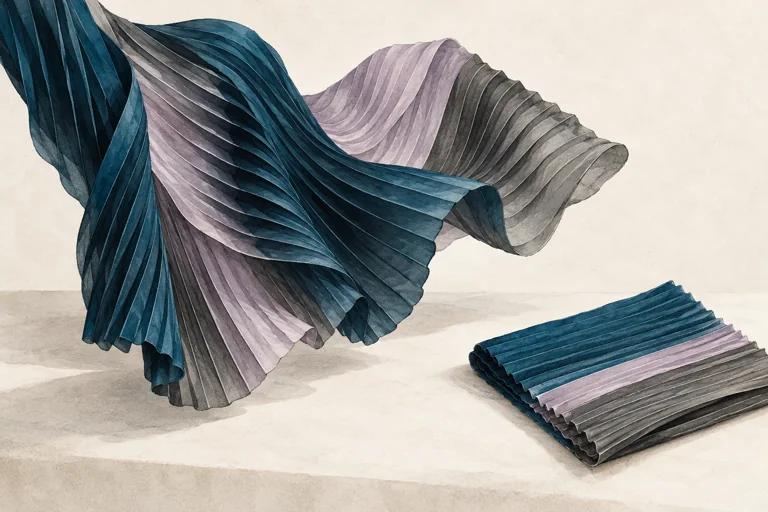
The starting point is direction. Woven cloth has an underlying structure, and a pattern can be positioned in relation to that structure in different ways. Cutting on the bias uses a diagonal relationship to the grain. The result can affect how a fabric yields and drapes, but it is not a magic formula that makes every material behave identically or every garment fit every person.
Separate the cloth from the cutting decision
A fibre name alone does not tell you how a dress will fall. Material, weave, weight, construction and cut all contribute. Our guide to fibre, yarn and fabric provides the vocabulary, while the discussion of weave and finish explains why apparently similar textiles can invite different design choices.
When looking at a finished garment, begin with what is visible: the way a seam travels, where fullness gathers and how the hem relates to the body. Do not infer the entire pattern from a front view. A soft silhouette can have several explanations, and a diagonal seam is not, by itself, a complete account of the grain of every panel.
Vionnet provides a documented reference
The V&A identifies Madeleine Vionnet as a major pioneer of bias-cut dress and describes how her early-twentieth-century work used the technique to develop a fluid silhouette. Its account emphasizes geometric complexity beneath an apparently simple result. This is a helpful reminder that restraint in appearance can demand substantial skill, rather than indicating an absence of construction.
Vionnet’s documented career belongs to French couture history. It is relevant as a comparative reference for a fashion visit to Milan, not as a claim that every fluid Milan garment derives directly from her or that a particular museum currently has her work on view. Keep the historical example attached to its source, and let the piece in front of you retain its own identity.
Ornament can also help shape a garment
The Metropolitan Museum’s record for a Vionnet dress dated 1926–27 describes gridded pin tucks serving both structural and decorative purposes. That object encourages a rewarding question: is a visible detail only embellishment, or does it also influence the fit and organization of the cloth? You may not be able to answer fully through a display case, but the question changes how you look.
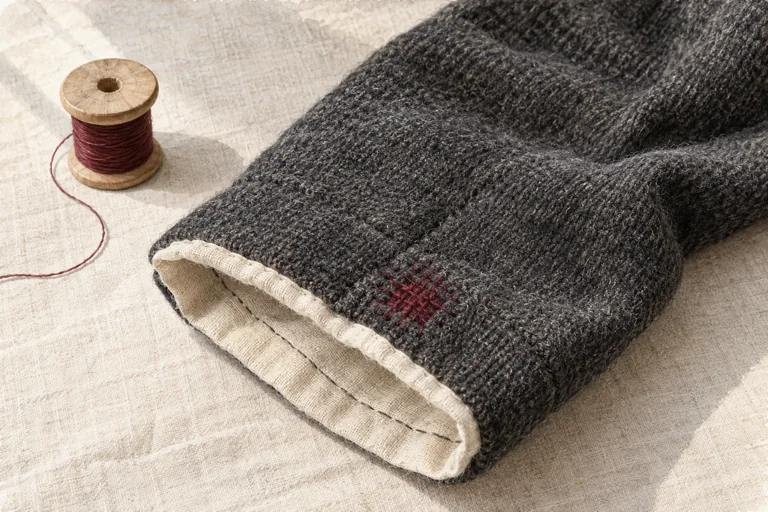
ASU FIDM Museum’s account of a Vionnet evening gown supplies another specific example. It explains that embroidery stitches were angled to follow the grain of bias-cut fabric so that decoration would not interfere with drape. Treat this as evidence about a documented making problem and its solution, not as a universal rule for diagnosing an unknown dress from a photograph.
Shopping observation is different from conservation access
In a shop, ask permission before handling a piece and follow the adviser’s suggestions about trying it on. Consider movement as well as a still reflection: walking, sitting and reaching are part of wearing clothing. Ask how the actual garment should be stored and cared for. Do not apply a historical museum description as a care instruction for a modern purchase.
In a museum, the boundary is different. Do not touch, tug or attempt to test a historic textile. Labels, catalog records and permitted views are your evidence. Our guide to garment mounting explains why a displayed silhouette also reflects conservation and presentation choices. A support may preserve the object while inevitably limiting what you can learn about its movement.
Make a precise note, then keep exploring
A useful notebook entry might separate three things: the material stated on the label, the construction detail you observed and the question you still have. This is more valuable than confidently naming a technique that the available evidence does not establish. Fashion rewards curiosity, and a well-framed uncertainty is often the beginning of a better conversation.
For a broader understanding of the city, consult Milan Tour Hub alongside our fashion and cultural experiences. Check each activity’s actual scope; shopping and museum experiences do not imply official runway access. A thoughtful Milan day can move between clothes, architecture and design without needing every connection to be a grand historical claim. Sometimes the most interesting discovery is simply how much a small change in direction can do to a piece of cloth.
Sources & further reading
Turn a good read into a great day.
Find a highly rated Milanese experience that brings these stories to life.
Explore related experiences →