What can a garment’s repairs reveal during a Milan fashion visit?

A small repair can change the way you look at an elegant garment. The eye that first follows a silhouette may begin to notice a reinforced edge, a replaced fastening or a patch that does not quite disappear. During a Milan fashion visit, those details can prompt useful questions about use and care. They are not automatic clues to a dramatic personal story. The most rewarding approach combines close observation with a willingness to leave uncertain things uncertain.
First decide what you can actually see
A visible seam may be original construction, a later alteration, a repair made during use or a conservation support added for preservation. From outside a display case, those possibilities can look surprisingly similar. Describe the detail before naming its purpose: a change in stitch spacing, a different fabric behind a tear, an extra line near a hem. Then consult the label or other interpretation to see whether the museum identifies it.
This is especially important when the garment has been carefully mounted. A fold, shadow or support can change the apparent outline. Our guide to museum mounting explains why the displayed shape is not simply a body frozen in time. Treat the back, lining and interior as unknown when they are not visible. A confident guess about an unseen seam is still a guess, however persuasive the overall silhouette may feel.
A documented example helps set the standard
The Victoria and Albert Museum in London describes conservation of an Indian jama associated with its nineteenth-century collections. Its account discusses damage, repairs and a supporting lining intended to reduce strain from the heavy skirt on the upper garment. This is a documented London museum example, not an object promised on display in Milan. Its value here is methodological: a repair can be understood because an institution has recorded the problem and the intervention.
That level of documentation is different from inventing a wearer’s experience from a patch. A worn cuff may invite thoughts about repeated movement, but it cannot independently tell you someone’s occupation, income or personality. A surviving repair may reflect economy, affection, necessity, later collecting or several motives together. The garment becomes more interesting when those alternatives remain available until evidence narrows them.
Distinguish maintenance from a change in style
An altered hem or fastening can suggest that an object continued to serve after its first making. To establish a sequence, however, a specialist may need evidence hidden from the visitor: construction details, fiber analysis, photographs, acquisition records or conservation notes. A museum label that cautiously says altered should not become a precise tale of a named owner changing fashion in a particular year unless the record supports it.
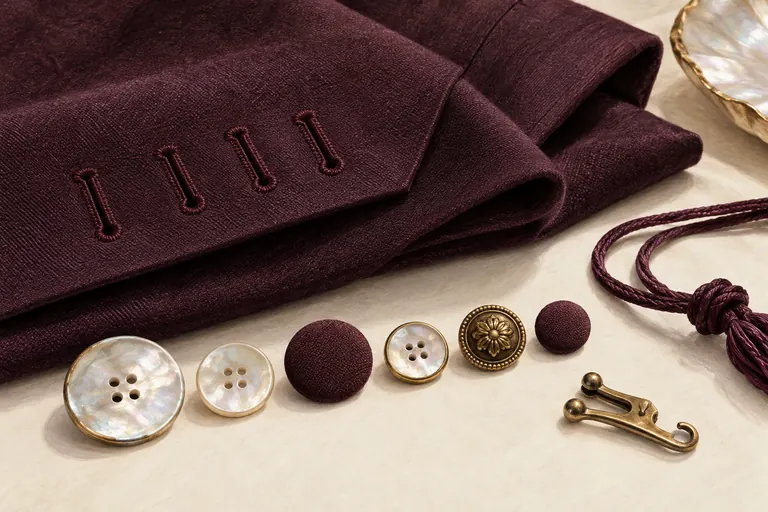
The same restraint improves vintage shopping. Ask which repairs or alterations a seller knows about, whether they affect wear and whether the attribution is documented. A visible repair does not by itself prove age, rarity or authenticity. Our articles on buttons and closures and museum labels offer complementary ways to separate useful observations from larger claims about maker, wearer and donor.
Expect a rotating view of a collection
Palazzo Morando is an important Milan reference for costume and fashion, but a collection is larger than the selection available on a particular day. The municipality explains that garments are shown in periodic rotations for conservation reasons. Check the current exhibition program rather than assuming a specific dress, period or repair will be accessible. A museum carrying costume in its name may also host an exhibition with a different focus.
If a textile object is on view, let the actual display determine your inquiry. A careful look at one accessible seam is preferable to searching the room for an example you were promised by an outdated article. For a journey continuing east, Venice’s Palazzo Mocenigo offers another setting in which clothing forms part of a broader account of material culture. Confirm the current route there separately; collections do not synchronize their displays for a traveler’s theme.
Looking is different from treating
Museum conservation is a professional practice with aims that may differ from making a vintage garment wearable. The V&A’s guidance on old wedding dresses distinguishes conservation advice from ordinary dressmaking needs and emphasizes the vulnerability of aged materials. A display visit should not become a recipe for washing, ironing or repairing something fragile at home. If an object matters to you, seek advice suited to its materials, condition and intended use before intervening.
You can still leave with a practical habit: look more carefully at the garments you own, read their care information and notice small damage before it spreads. That is a different task from treating an historic textile. The distinction protects both the object and the accuracy of the story you tell about it.
Browse our Milan design and culture experiences for a visit that suits your interests, checking the actual museums and subjects included. An engaging guide can help frame questions, but no tour description should promise access to a conservation workroom unless that access is explicitly confirmed. A tiny repair offers a large lesson: attention is valuable, and evidence is what turns attention into understanding.
Sources & further reading
Turn a good read into a great day.
Find a highly rated Milanese experience that brings these stories to life.
Explore related experiences →