How does a museum mount a historic garment?

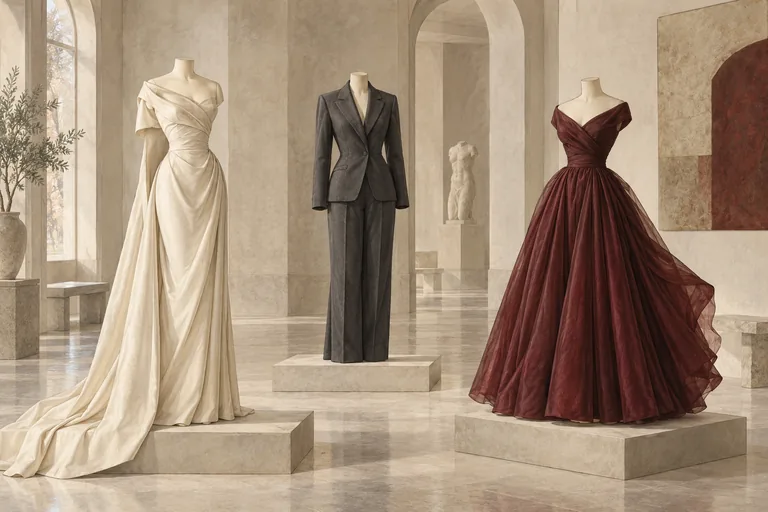
A historic dress in a museum can appear effortlessly poised. Its sleeves hold their shape, the skirt falls coherently and the neckline seems to belong to an invisible wearer. Much of that apparent ease depends on work intended to remain discreet. The support underneath is part of how the garment becomes readable, even when the visitor barely notices it.
For a fashion-minded Milan stay, looking at display supports offers a different kind of pleasure from recognizing a designer. It encourages attention to construction, proportion and care. Our Palazzo Morando guide is a useful starting point for planning a local costume visit; the conservation examples below come from published museum practice, not from an assumption about how any particular Milan display was made.
Recognize the work beneath the silhouette
The V&A’s explanation of mannequin making at East Storehouse describes custom supports, padding and underpinnings that help present garments appropriately. It also discusses reconstructed missing elements used to make an object’s appearance understandable. These are considered display decisions, rather than evidence that a surviving garment can simply be placed on any available shop mannequin.
As a visitor, begin by looking at proportion: where is the waist, how is the shoulder shaped and how much volume sits between body and cloth? Then read the label. If it identifies a reconstruction or a separate supporting element, keep that distinction in your interpretation. The visible ensemble may combine surviving material with carefully explained display assistance.
Do not mistake support for the original wearer
A mount communicates a garment’s shape, but it is not automatically a precise likeness of the person who once wore it. A posed display can make that distinction easy to forget. Avoid inferring an individual’s height, posture or daily comfort solely from the silhouette in front of you, particularly when the object’s history is incomplete.
The V&A’s account of mounting eighteenth-century men’s dress describes the challenge of adapting modern forms to historical clothing. It is a useful reminder that a contemporary body standard is not a neutral default. The object’s construction and conservation needs should guide the display, rather than forcing the garment to conform to a convenient support.
Look at fabric and structure separately
Begin with the cloth itself: can you see a change of texture, an embroidered edge or a seam? Then consider how the display makes those features visible. A sleeve held away from the torso may reveal decoration that would otherwise be difficult to study. A quieter pose may help you understand a line of fastening without distracting movement.
Our guide to fibre, yarn and fabric provides vocabulary for the first part of that exercise. The second part asks about presentation. Keep both questions open. A lustrous surface does not identify a fibre conclusively, and an elegant outline does not reveal every internal support or construction detail.
Understand why the display may change
Palazzo Morando’s official information describes a costume and fashion collection presented through changing displays. The presence of a garment in a collection catalogue or an old exhibition photograph therefore does not guarantee that it will be on view during your trip. Check the current programme before building an afternoon around one object.
That is especially useful during Fashion Week, when a compelling image can circulate without its original exhibition dates. Separate the collection, the current display and any temporary event. None of those automatically grants entry to an official runway show. Our visitor access guide keeps museum planning distinct from invitation-only industry activity.
Ask questions that a label can answer
Three questions make a practical looking exercise. Which parts are original? What material or date is firmly identified? Does the interpretation explain how the garment was supported or worn? A label may not answer all three. That absence is a reason to remain cautious, not permission to fill the gap with an attractive story about the owner.
If photography is allowed, capture the label as well as the object for your private notes, respecting the venue’s rules and other visitors’ space. Do not touch a hem or support to test a theory. Museum mounting is skilled work undertaken within conservation constraints, not a handling technique to imitate on something you encounter in a gallery.
Take the observation into the rest of Milan
Afterwards, a shop window may look different. You may notice the display’s choices without confusing a commercial presentation with a museum’s responsibilities. Our garment construction guide shifts attention back to a piece you can examine with permission, where questions about seams and finish have a different practical purpose.
Use the design and culture experience collection to find a visit that suits that curiosity, checking the specific venue and inclusions. The satisfying outcome is not a new set of display rules to memorize. It is a more attentive eye: one that can appreciate a beautiful garment while also recognizing the careful, largely hidden decisions that allow it to be seen.
Sources & further reading
Turn a good read into a great day.
Find a highly rated Milanese experience that brings these stories to life.
Explore related experiences →