Bagatti Valsecchi: Renaissance taste in nineteenth-century Milan
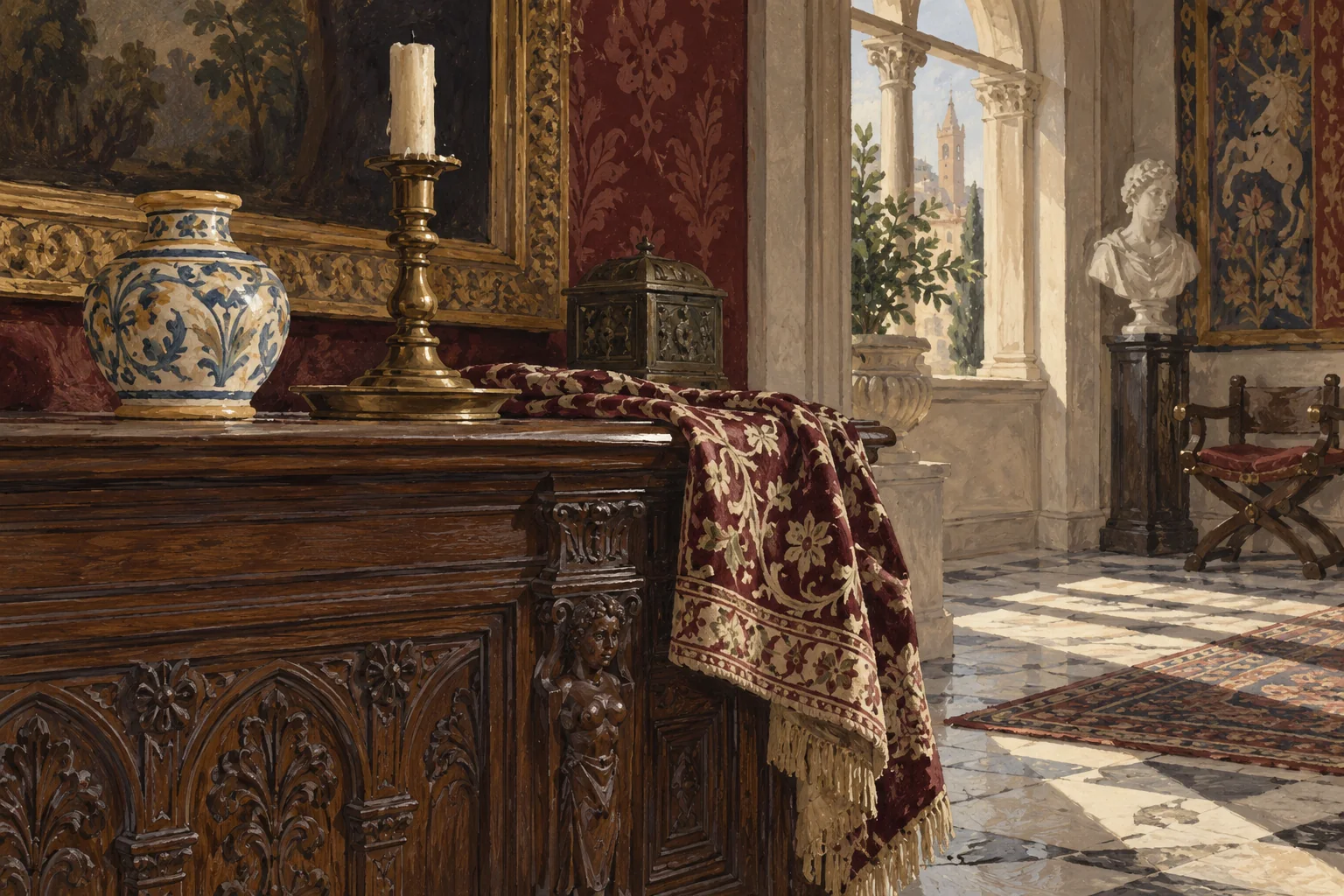
The Bagatti Valsecchi Museum offers fashion-minded visitors a rewarding change of scale. Instead of a collection organized around a designer’s career or a sequence of garments, it presents a house in which objects, rooms and personal taste form an ensemble. Its essential distinction is also its most interesting feature: this is a nineteenth-century vision of Renaissance living, assembled around historic works and furnishings, rather than an untouched Renaissance household preserved by chance.
Begin with the brothers’ project
The museum traces the house to Fausto and Giuseppe Bagatti Valsecchi, who began renovating their family home in the 1880s. They collected fifteenth- and sixteenth-century works with the intention of creating a residence inspired by Lombard Renaissance interiors. The result asks you to consider both the age of an object and the later decision to place it within a particular room.
That double chronology is useful. A historic work may be old, while the ensemble in which you encounter it reflects the choices of a much later owner. Look for the museum’s labels and explanations rather than assuming that everything visible belongs to one date. You are reading a collection and an act of historical imagination at the same time.
Think about dress and rooms together
A visitor interested in fashion can begin with proportion, texture and framing. How does a richly patterned surface sit beside a comparatively plain one? What makes an object seem ceremonial, domestic, delicate or substantial? These are observations you can test against what is in front of you. They do not require you to claim that a particular room directly influenced a particular designer.
Clothing and interiors also share a relationship with bodies: both shape the way people move and present themselves. Yet the comparison has limits. Furniture is not a garment, and a painted figure is not a complete record of daily dress. Our guide to Renaissance portraits and clothing offers a careful method for using visual evidence without asking it to answer questions it cannot resolve.
Let one material guide your attention
The museum’s collection categories include textiles alongside ceramics, wood, metal, glass and other materials. Choose one material as a thread through your visit. With textiles, for example, notice pattern scale, borders and the relationship between a flexible surface and the harder objects around it. Follow the labels for dating, origin and function; a pleasing pattern alone cannot establish where something was made or how it was used.
This focused approach is especially helpful when rooms contain many objects. You do not have to inspect everything with equal intensity. Pick a small group, compare it thoughtfully, and let the rest of the interior provide context. Our introduction to Como silk as a designed material gives you another set of questions about surfaces, manufacture and the difference between a fibre and a finished object.
Notice the house as an arrangement
A house museum communicates through placement as well as through individual masterpieces. Ask what you see first when entering a room, what invites a closer look, and how your view changes as you move. The museum emphasizes the coherence of the brothers’ project, so these relationships are part of the subject. A cabinet, a painting and a small decorative object can be understood separately, but their arrangement adds another layer.
Keep your observations modest and precise. “The dark wood makes this pale object more prominent” is a useful looking exercise. “This proves how Renaissance families lived” is a much larger claim and would need evidence beyond the present display. The pleasure of the visit is not reduced by that distinction; it becomes more interesting when you recognize the collectors’ own contribution.
Fit the museum into a measured Milan day
The house is in the fashion district, with its public entrance at Via Gesù 5. Check the museum’s current opening and ticket information before setting out, especially around special events. Make the museum the main interior visit for that part of the day, then give yourself time outside to absorb what you saw. Our considered Quadrilatero walk provides a natural neighborhood context without turning the afternoon into a sequence of purchases.
Compare the design and culture collection if you would like a guided experience, verifying that the named museum is actually included. Travelers continuing to Turin may enjoy the contrast with Turin’s royal residences and museums, where patronage and display take different forms. At Bagatti Valsecchi, the most productive final question is simple: which part of what you admired belonged to the historic object, and which belonged to the art of putting a house together?
Sources & further reading
Turn a good read into a great day.
Find a highly rated Milanese experience that brings these stories to life.
Explore related experiences →