Como silk: from a remarkable fibre to a designed textile
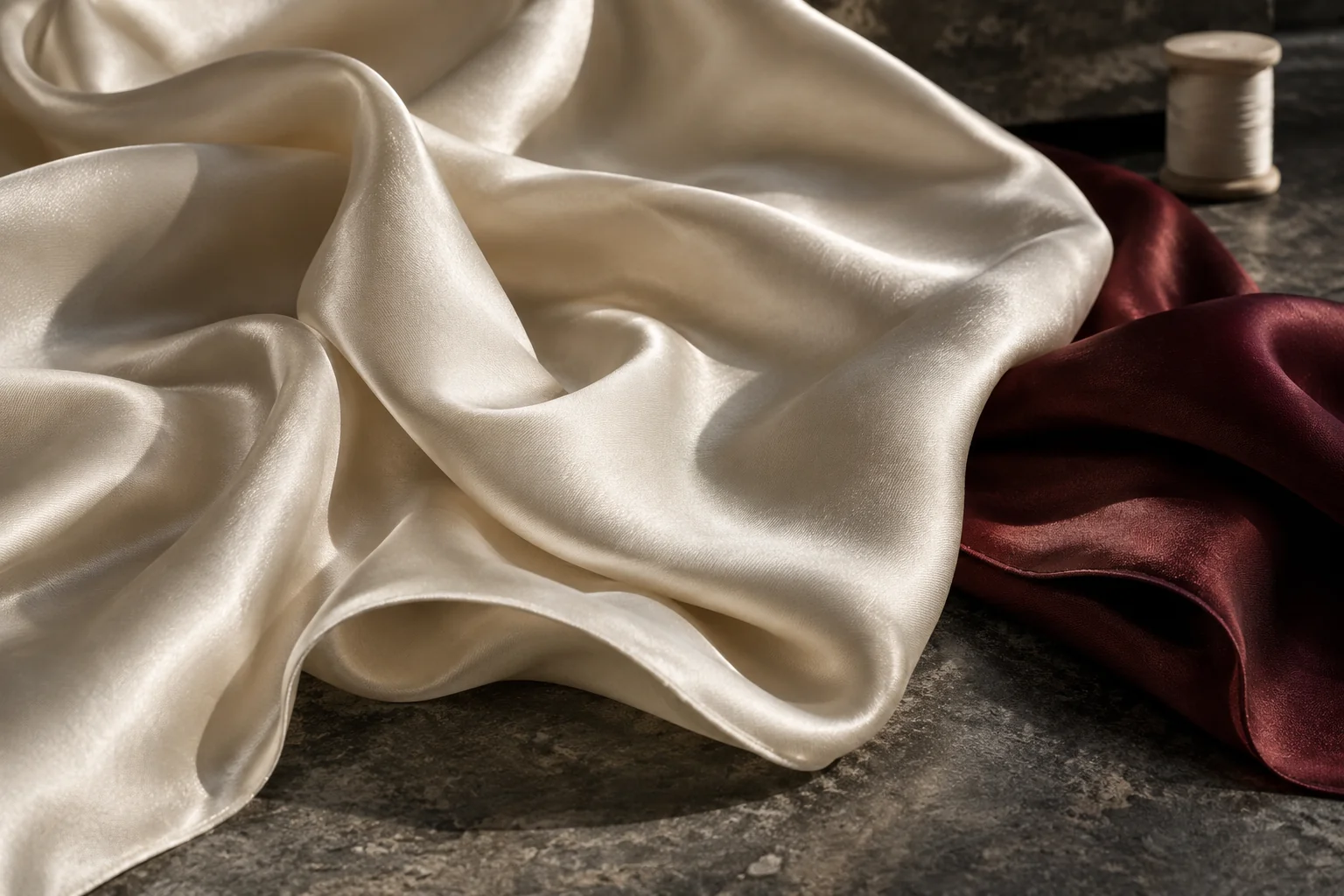
Silk is easy to admire as a finished surface and surprisingly easy to discuss imprecisely. A smooth scarf can invite the word “silk” before anyone has checked its composition, while a pattern can distract from the way the cloth itself was made. Como offers an excellent opportunity to slow that process down and look at the stages between a fibre and a designed textile.
The Museo della Seta in Como preserves machines, tools, samples and documents connected with the local textile tradition. Its emphasis on production makes it especially useful for a visitor whose experience of fashion usually begins in a shop. The museum is evidence of a material and industrial history; it should not be treated as a guarantee about every item sold near the lake.
Begin by separating fibre from fabric
A fibre describes the material from which a textile is made. A fabric also involves structure, treatment and design. Those categories help explain why two items with a similar composition can feel very different, and why a similar-looking surface can be made in different ways. Read a composition label before relying on shine or softness as a guide.
For shopping in Europe, the EU’s textile-labelling guidance explains the role of fibre-composition information. A label is a useful starting point, not a complete quality assessment or a description of every stage of manufacture. Our guide to judging a garment applies that distinction to construction, fit and care as well as material names.
Follow the sequence rather than rushing to the pattern
At a textile museum, try to follow what each stage changes. Ask what arrives at a machine, what operation occurs, and what leaves it. You do not need to memorize every technical term to understand that preparing thread, constructing cloth and decorating a surface are different kinds of work. The sequence makes the final object more legible.
The museum’s visitor information describes a route through silk processing and identifies historical machinery within the collection. Check the current display and any interpretation available in your preferred language. A working demonstration, when specifically offered, is different from a static machine exhibit. Do not assume that every piece of equipment operates during an ordinary visit.
Notice the human decisions inside the process
A machine can make technical complexity visible, but it does not remove human choices. Consider the relationship between repeat, scale and the intended use of a textile. A pattern that reads clearly across a large hanging may behave differently when folded into a narrow scarf or cut into several garment pieces. This is a useful looking exercise even when you do not know the designer’s intention.
Try drawing one small repeat in a notebook, then imagine where a seam would interrupt it. You may begin to see why a finished garment needs more than an attractive printed surface. Cutting, placement and construction can either support or disrupt what the textile offers. The experiment is a way to sharpen observation, not a substitute for technical training.
Keep the regional history specific
The Lombardia Beni Culturali account of the museum describes its foundation in 1990 and its focus on Como’s nineteenth- and twentieth-century silk history. That is a firmer starting point than a sweeping claim that every aspect of local silk manufacture has remained unchanged for centuries. Techniques, supply chains and the ways objects reach customers can change substantially.
Our medieval Milan textile article and Sforza court article consider earlier material worlds without collapsing them into the same industrial story. Read across the periods, but keep their evidence separate. A shared material can connect questions across time without proving a continuous, unaltered local process.
Turn interest into a well-shaped day
If you want to visit from Milan, our Como silk day-trip guide helps place the museum within a realistic itinerary. Compare it with Milan Tour Hub’s broader Lake Como planning article before adding boats or distant towns. A focused day in Como can be enough. You may return with a scarf, but the more lasting purchase is a better set of questions about the cloth already in your wardrobe.
Sources & further reading
Turn a good read into a great day.
Find a highly rated Milanese experience that brings these stories to life.
Explore related experiences →