Before the boutiques: medieval Milan, Brera and the cloth economy
Milan’s fashion story becomes more interesting when you look beyond designers and consider the people who made cloth. Before a garment can acquire a memorable silhouette, fibre must be prepared, thread handled and a surface constructed. Medieval textile history asks us to notice work, organization and material knowledge alongside the display of wealth. Brera offers a particularly useful place to begin that change of emphasis.
The regional architectural record for Palazzo di Brera traces the site to the religious community of the Umiliati. The Pinacoteca’s own history of the palace and gallery connects that community with wool production. These sources establish a documented textile connection in the neighborhood’s past. They do not establish that today’s boutiques descend directly from a particular medieval workshop.
Separate the place from the building you see
A historic site can retain its name while its buildings, uses and inhabitants change. Brera is not a preserved medieval cloth factory waiting behind a modern sign. When you walk through the area, distinguish the history of the site from the date of the structures in front of you. A later courtyard can occupy a place with an earlier working history without illustrating that earlier period literally.
This distinction makes urban walking richer. Instead of asking only “How old is this building?”, ask which activity occupied the ground before it, what the later building replaced, and what evidence supports the answer. Our Brera guide for fashion lovers carries that habit into a present-day visit. Looking closely is often more rewarding than finding a single origin story.
Think of cloth as a sequence of tasks
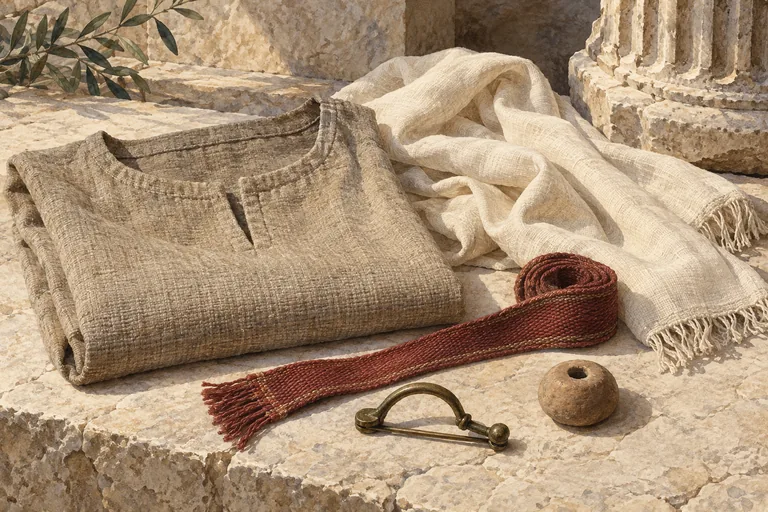
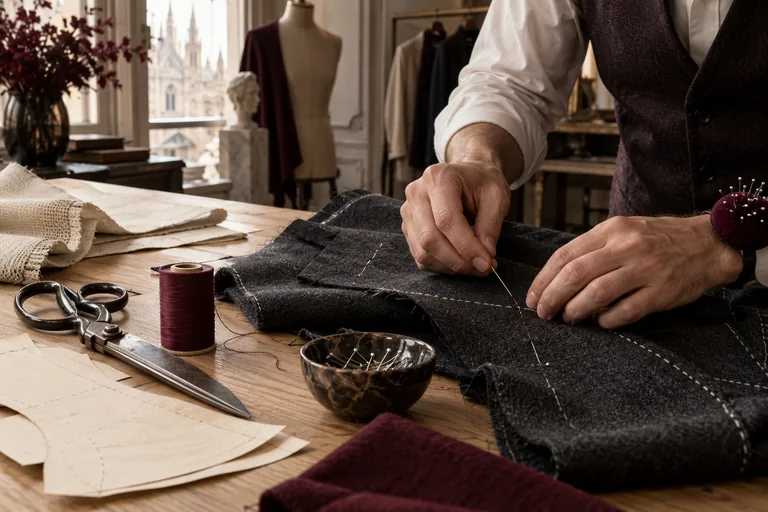
Consider how many decisions lie between raw material and a usable garment. Different stages require different kinds of skill, space and equipment. A cloth economy therefore involves more than the person visible at a loom or the merchant visible at a counter. It also raises questions about training, exchange, quality and the movement of materials between places.
For a visitor, this is a way of reading history rather than a claim to know the exact organization of every Milanese workshop. Avoid treating all fibres or all centuries as interchangeable. Wool, silk and a finished garment are different things; evidence for trade in one does not automatically prove local manufacture of another. Our introduction to Como silk makes similar distinctions between a fibre, its processing and a designed textile.
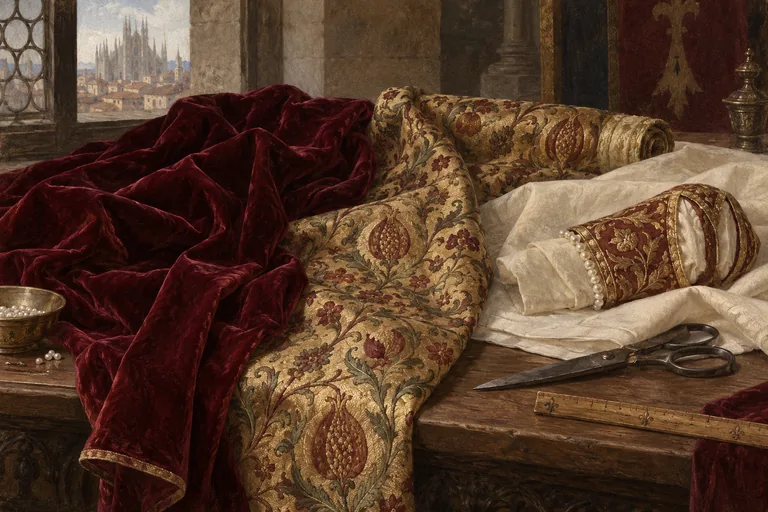
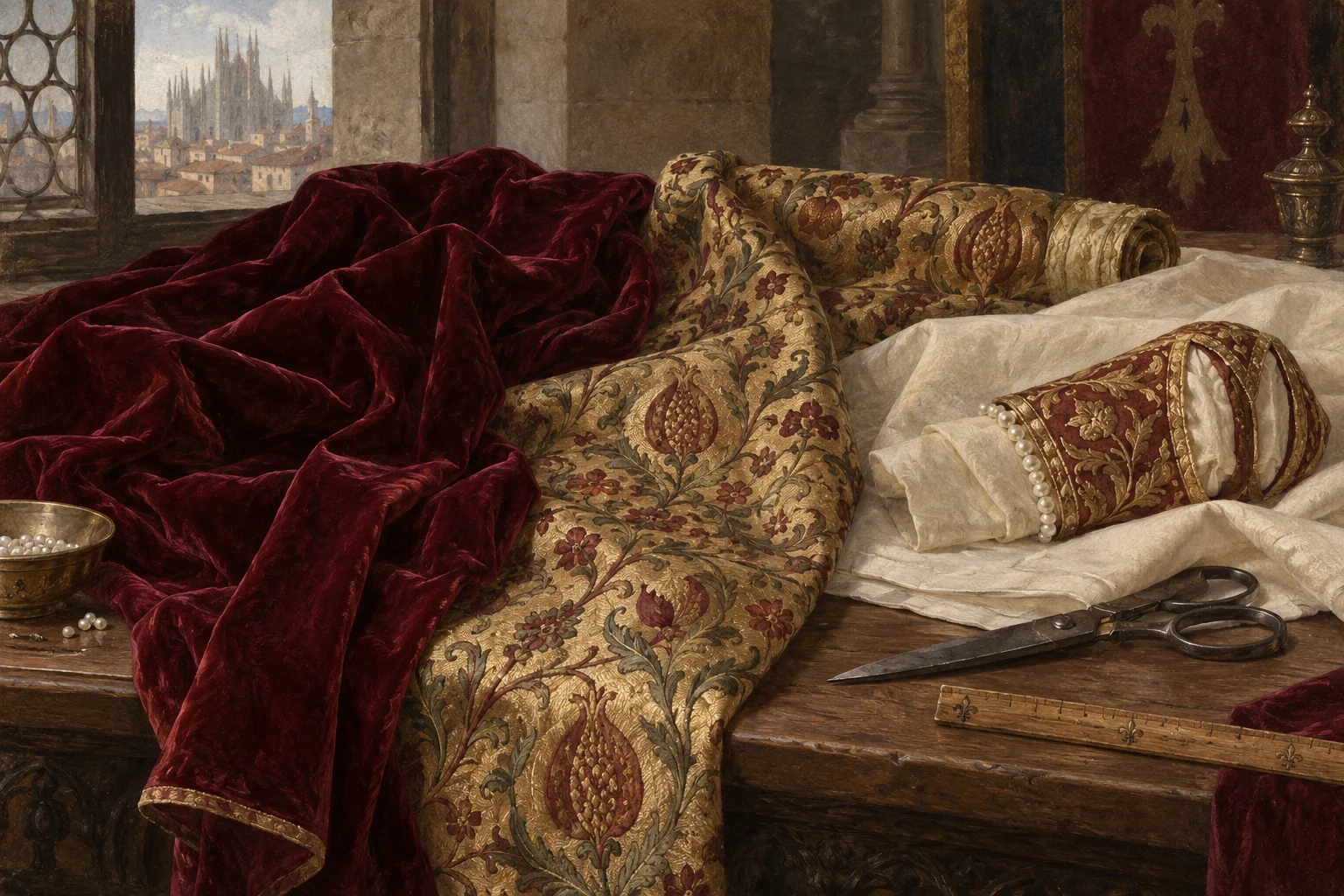
Precious cloth could also furnish a room
Textiles belonged to interiors as well as bodies. The regional collection record for the April tapestry associated with Bramantino and Benedetto da Milano identifies wool and silk in an early sixteenth-century work now connected with the Castello collections. It is later than medieval Brera, but it provides a useful next chapter in thinking about the value placed on woven surfaces.
Do not use a tapestry as a direct illustration of everyday clothing. Instead, compare the questions it raises with those raised by dress: who designed it, who made it, how was costly material organized, and what did a viewer understand from the result? The distinction between a wall hanging and a garment is obvious in use, yet both can make technical skill visible.
Keep labor in the story of luxury
A beautiful object can draw attention away from the effort that produced it. Make room for that effort in your visit. Look for tools, process descriptions and the names of makers in museum interpretation. Where the evidence is limited, let the gap remain visible. A story that acknowledges anonymous work is more responsible than assigning every achievement to a single ruler or celebrated patron.
Our Visconti and Sforza court article shifts from production to the public language of magnificence. Reading the two subjects together helps separate the people who commissioned textiles from the people who made them. They participated in connected worlds, but they did not necessarily share the same resources, recognition or daily experience.
Walk with a more useful question
On a modern Brera visit, choose one material detail to follow: a woven surface in a painting, a patterned shop display, or the changing scale of an architectural doorway. Milan Tour Hub’s neighborhood walking guide can help organize the route. The purpose is not to declare the Middle Ages responsible for everything stylish around you. It is to recognize that fashion rests on a much larger history of skilled making, and to give that history some of your attention.
Sources & further reading
Turn a good read into a great day.
Find a highly rated Milanese experience that brings these stories to life.
Explore related experiences →