Where does a La Scala costume go after the curtain falls?

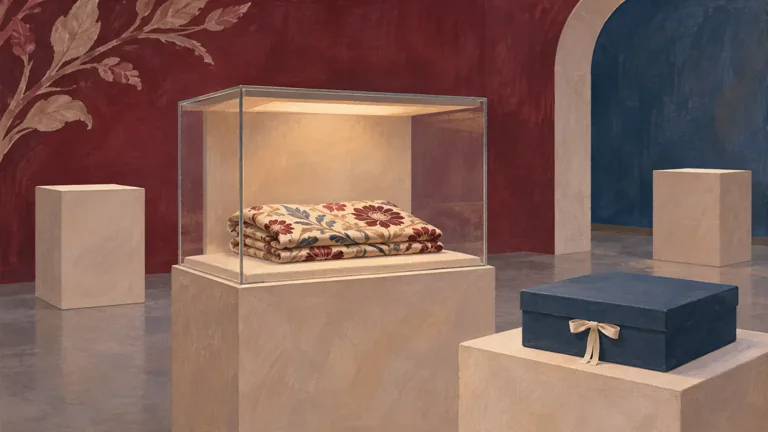
The audience sees a costume for a few hours. At Milan’s Teatro alla Scala the working life of that garment can extend across cleaning, repairs, storage and a new fitting long after the applause has faded. The Caramba Pavilion at the Ansaldo workshops brings several stages of costume production together. Looking at this cycle changes what you might notice from a theater seat. A coat that seems inseparable from one character in a particular performance may have had to fit a different performer in an earlier revival.
Give the costume more than one address
The theater’s account of the Ansaldo workshops locates the workshops in a former industrial complex in Milan, where several production departments came together in 2001. The performance venue and the workshops are different destinations. A costume can be made or reworked in one place, used onstage in another and returned to storage to wait for a new call. A substantial institutional wardrobe depends on being able to track those movements and retrieve the right object when a production returns.
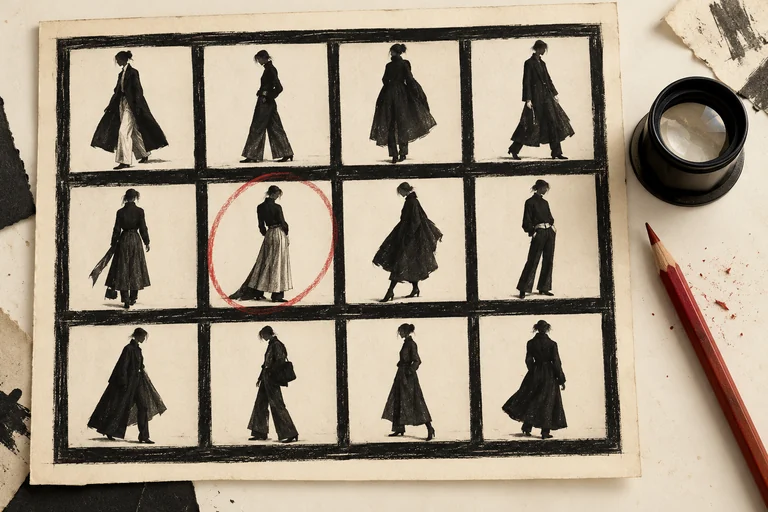
Imagine two jackets in the same dark fabric and cut. In a photograph of a full ensemble the distinction may be invisible. To a wardrobe team it could be decisive. They might belong to different characters, accommodate different measurements or correspond to different moments in a production. A garment’s identity here includes its use in a particular theatrical design. The question extends beyond who designed the jacket to which production needs it and what must happen for somebody to wear it again.
Refitting is part of the production
La Scala’s Caramba Pavilion description sets new costume making alongside a substantial amount of refashioning and fitting from stock. Something stored from an earlier production can provide valuable evidence about color, cut, trim and how the ensemble was meant to look together. A returning cast may not have the same measurements. The wardrobe team has to reconcile design continuity with the needs of a living person who must move, breathe and perform.
If you sew, imagine taking a waist in slightly while leaving a line of decorative trim in its intended position. An alteration that solves the circumference might disturb the pattern, pull a closure out of line or change the way a coat falls at the back. Even a small change at one seam can require judgment at several others. Our guide to seam allowances gives a material context for this problem. It is prudent to avoid guessing that a visible seam in a stage photograph is a later adjustment when no garment record supports it.
The work that follows the last performance
The theater describes cleaning a costume on its passage from store to wardrobe for use and again after its final performance. Fabrics, trimmings and combinations of materials can pose different care problems. A costume designed primarily to register under stage lights might incorporate details a visitor would never expect to find in a washable everyday garment. The fact that a theater has a professional cleaning operation does not turn its working methods into instructions for treating an antique or a household garment.
The collection of stored productions gives this routine a historical dimension. An object kept for possible reuse can become evidence of the theater’s design, craft and performance history. A costume with an intact original arrangement may answer one question. A costume altered repeatedly may answer another about how institutions keep a production in service. Our guide to garment repairs develops the same idea for clothes viewed more closely than an audience in a large theater normally could.
Choose the right way to encounter the work
A performance ticket gives you the audience’s view of a staged production. The Ansaldo workshop visiting guide explains how to verify separate workshop arrangements for any opportunity to see the production spaces. A tour follows the theater’s current terms and route. A description of what the Caramba Pavilion contains does not establish that visitors may browse stored costumes, watch a fitting or enter an active work area at will. Check the organizer, meeting point, language and date directly.
When comparing Milan cultural experiences, look for the difference between a theater museum visit, an auditorium visit and an organized trip to the workshops. If you also plan to see a performance, the Milan guide to the La Scala museum and stage sets out how those visits relate. On the night itself pick one costume that has to work hard, perhaps in a quick entrance or a wide movement. The sleeve falling back into place in a second may be the only visible trace of a much longer relationship among a designer, a wardrobe team and a performer.
Sources & further reading
Turn a good read into a great day.
Find a highly rated Milanese experience that brings these stories to life.
Explore related experiences →