Can you visit La Scala’s costume workshops in Milan?
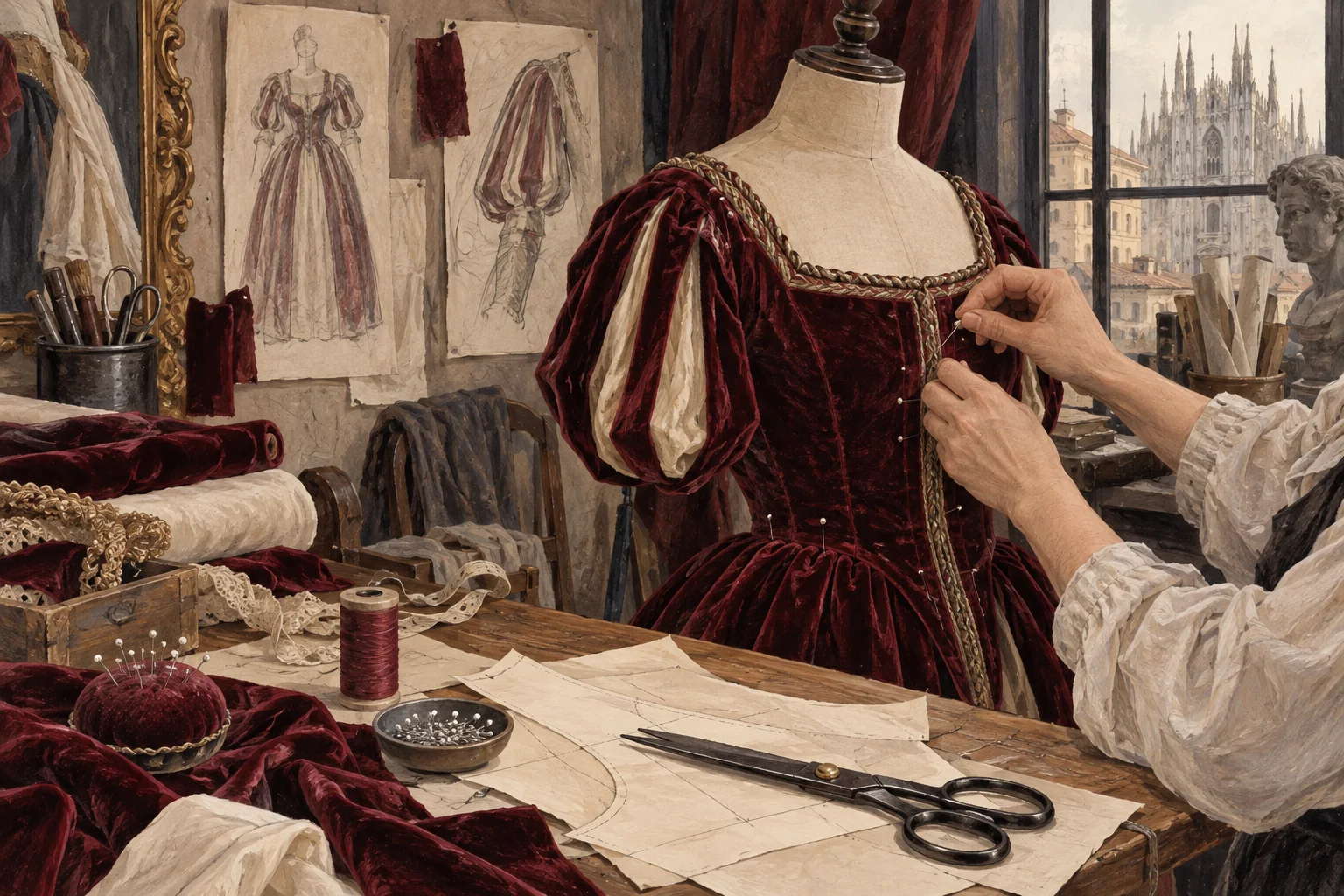
Yes: La Scala offers guided public visits to its Ansaldo workshops, subject to the published calendar and advance booking. For a visitor interested in fashion, the appeal is a different relationship between clothing and its audience. A stage costume must help communicate a character at a distance, within lighting, movement and a production’s visual world. Seeing where theatrical objects are prepared can make you look at a sleeve, fastening or silhouette with fresh attention.
Go to the workshops, not automatically to the theatre
The Ansaldo workshops are at Via Bergognone 34, separate from the theatre and museum in central Milan. The official visiting page describes a guided route through workshop pavilions, including the costume store. Reserve the correct experience and check the meeting instructions carefully. A museum ticket, a performance ticket and a workshop visit should not be treated as interchangeable access to the same places.
The official workshop booking page currently gives a visit length of about 60–75 minutes and says individual departures follow the available calendar. It also states that an individual visit depends on reaching a minimum group size. Confirm the arrangements when booking and leave flexibility around the appointment. An elegant day is often the result of leaving enough space between its fixed points.
Understand the industrial setting
La Scala’s own account places its workshop complex in the former Ansaldo industrial premises from 2001. It brings together numerous production crafts, including costume work, carpentry, sculpture and scenery construction. The setting is a reminder that a finished stage image depends on an extensive material operation. A performance may look effortless from a seat in the auditorium because a great deal of coordinated work has already happened elsewhere.
For a fashion-minded traveler, this is an opportunity to expand the idea of craft beyond the boutique. A garment can be made to withstand movement, repeated use or a particular visual effect. Those purposes influence decisions about construction. Our guide to looking closely at garment quality in Milan offers questions about making and use, while reminding you that different clothes serve different needs.
Look at the relationship between design and distance
Without handling anything, consider how a design might read from several viewpoints. Which feature would catch the eye across a large room? What becomes visible only when you stand close? These are useful interpretive questions, not claims about the intention behind a particular costume. Let the guide explain the production context before deciding why an unusual proportion or surface was chosen.
Do not assume that a historic-looking costume is a surviving garment from the period it depicts. Theatre creates representations. A costume can be a carefully researched interpretation, a deliberately stylized design or part of a production with its own visual logic. Our article on reading clothing in Renaissance portraits offers a parallel caution: an image of dress and an everyday wardrobe are not the same kind of evidence.
Respect a workplace rather than expecting a demonstration
The official visitor notice says that workers being active during a tour is not guaranteed. Arrive interested in the place and its interpretation, rather than expecting a private performance of craftsmanship on demand. Follow the guide’s route and instructions. Tools, materials and work in progress have practical purposes, even when they are visually fascinating to a visitor.
Photography has specific restrictions, including protection of staff and production material. Check the current rules and ask before taking an image when uncertain. A written note about something you learned may prove more useful than a photograph you cannot properly contextualize. Suitable clothing also matters in large working spaces; consult the operator’s seasonal advice rather than dressing solely for a polished city portrait.
Build a fashion visit around confirmed access
A workshop appointment can make a strong anchor for a Milan day, but it is independent of Fashion Week runway access. The presence of a public craft visit does not imply an invitation to a designer’s show or backstage area. Our Fashion Week access guide explains why the distinction matters when comparing advertisements and planning expectations.
For another day, browse our Milan design and culture experiences and check the actual museums or studios named. A longer journey could connect this workroom perspective with Como’s silk-making history. The connection is material and intellectual rather than a promise that the same supply chain served every garment you see. Leave the workshops with one or two precise observations: how a construction choice served a role, or how several crafts contributed to one visual effect. That is a richer souvenir than simply having stood near the backstage world.
Sources & further reading
Turn a good read into a great day.
Find a highly rated Milanese experience that brings these stories to life.
Explore related experiences →