Milan fashion looking: what can a seam allowance tell you about alterations?

Inside a garment, the cloth beyond a line of stitching can look like an unfinished remainder. A seam allowance is more purposeful than that. It gives the joined pieces material with which to form the seam, and in some circumstances it may leave room for a later adjustment. The interesting word is “may”: visible spare cloth is evidence to examine, not a promise that a garment can be enlarged.
During a Milan shopping appointment or an authorised study visit, this distinction can improve the questions you ask. Instead of requesting an alteration on the strength of a quick look inside, ask how the particular seam, fabric and surrounding construction affect what is possible.
Find the cut edge and the stitching line
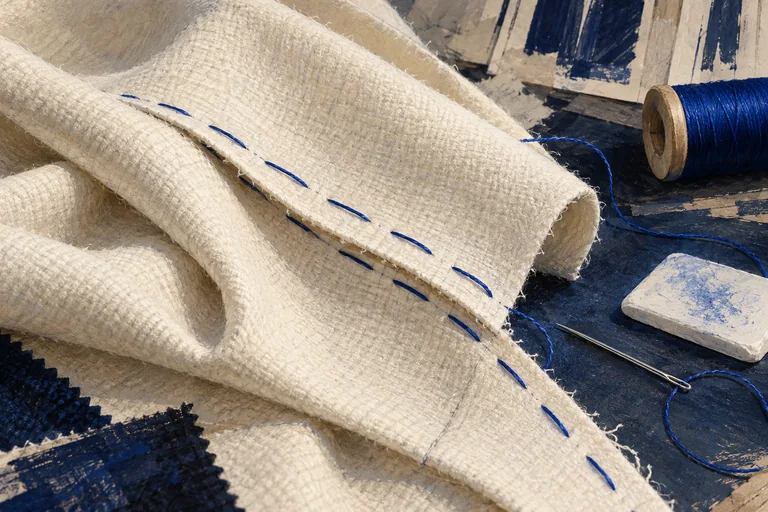
Simplicity’s Sewdirect guidance defines the allowance as the distance between the cut edge and the stitching line. Its instructions explain that the material helps with joining, finishing and pressing a seam, and can sometimes provide room for an alteration. The familiar 1.5-centimetre allowance in some of its patterns is a pattern convention, not a measurement you should impose on every garment or designer.
For an object you may handle, first ask permission to see the relevant inside seam. Identify which line actually joins the pieces and which stitches finish an edge or serve another purpose. A busy interior can contain several different operations. If you cannot distinguish them, a tailor’s explanation is more reliable than guessing from the nearest visible row of thread.
In an exhibition, the inside may not be displayed at all. That limits the conclusion you can draw. A smooth exterior does not reveal how much cloth remains within a seam, and an image of one exposed area does not establish the construction everywhere else. Record what the view supports and leave the hidden parts unresolved.
Why does spare cloth not guarantee a larger garment?
Changing one seam changes its relationship with other parts of the garment. A professional assessment needs to consider the whole piece, including its lining, openings and shaped areas. The available margin is only one part of that conversation. Ask what else would need to move, and whether the proposed result would preserve the proportions you like.
The condition of the material also matters. A former stitching line may leave marks; the newly exposed fabric may not look exactly like the surface that has been visible during wear. These are possibilities to ask about, not faults that can be diagnosed from an online photograph. Have the actual garment examined before agreeing to a result, cost and timescale.
A larger allowance is not automatically a sign of better design. Different seams solve different problems, and extra bulk can be undesirable in some locations. Sewdirect’s seam guidance shows several ways edges and joins can be constructed. The useful question is whether the chosen solution serves this textile and this part of the garment, not whether every seam contains the same generous margin.
Ask for a defined alteration, not a vague improvement
Describe what happens when you wear the garment: where movement feels restricted, where excess cloth gathers, or which length you want to reconsider. Avoid supplying a technical solution before the tailor has examined it. The desired change and the method of achieving it are separate matters.
Ask which fittings are needed, what can be assessed before work begins and whether any change is difficult to reverse. If the piece has historical, sentimental or conservation value, say so at the start. An alteration intended to make a garment wearable has a different purpose from preserving an object as evidence of its earlier form.
Our paper-pattern guide explains how a pattern communicates construction, while the guide to temporary basting considers a different stage in testing a garment. Neither a pattern mark nor temporary stitching should be confused with the amount of cloth left in a finished seam. Our article on surviving repairs helps frame evidence of later interventions without inventing the wearer’s story.
Carry the question into a wider design visit
A visit to Milan’s ADI Design Museum offers another setting for asking how an object’s function relates to its design. The analogy is useful because it encourages attention to decisions that are easy to overlook when only the finished surface is visible.
For current Fashion Week planning, CNMI lists the next menswear edition for 15–19 January 2027 and the next womenswear edition for 23 February–1 March 2027. Shows are invitation-based. Compare shopping and cultural appointments through our fashion experience collection, checking their actual scope; a tailoring or shopping service does not provide official show entry, accreditation or backstage access. A thoughtful conversation about one seam can be a complete fashion encounter in its own right, grounded in the garment in front of you.
Sources & further reading
Turn a good read into a great day.
Find a highly rated Milanese experience that brings these stories to life.
Explore related experiences →