Milan textile shopping: how weave and finish change a fabric

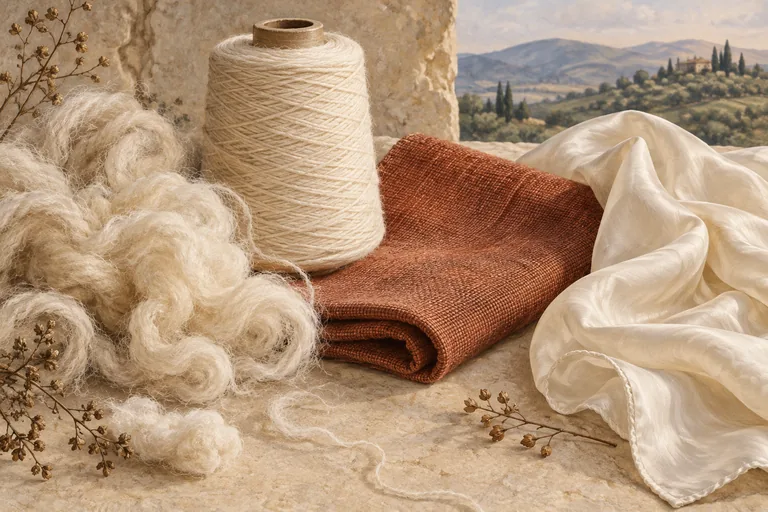
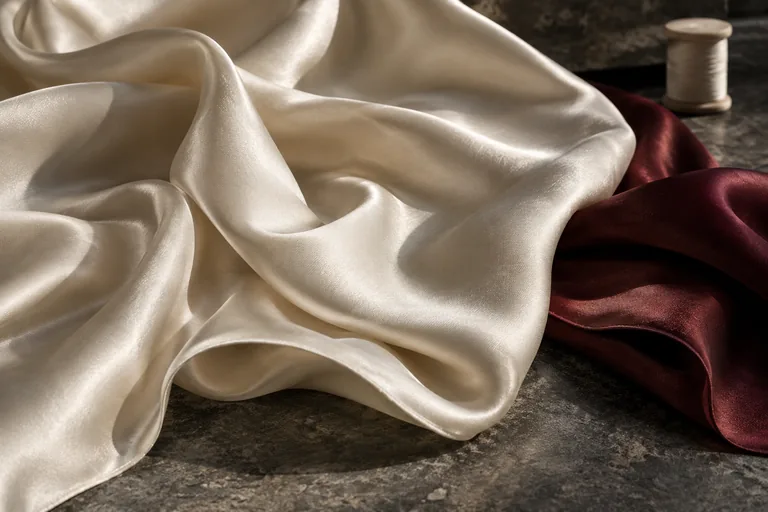
Two fabrics can share a fibre label and behave quite differently. One stands away from the body, another falls in soft folds; one catches the light broadly, another breaks it into tiny changes of texture. During a Milan visit, looking at those differences can make a shop window or museum display more rewarding than simply recognizing a name.
Our guide to fibre, yarn and fabric establishes the vocabulary. This article moves one step further: how the construction of a cloth and its later treatment contribute to what you see. It is an invitation to ask more precise questions, not a method for certifying a material from a photograph.
Separate the ingredient from the structure
The fibre tells you something about what the textile is made from. Weaving describes one way yarns are arranged into cloth. Knitting, embroidery, printing and other techniques answer different questions and should not be treated as interchangeable words for a decorative surface.
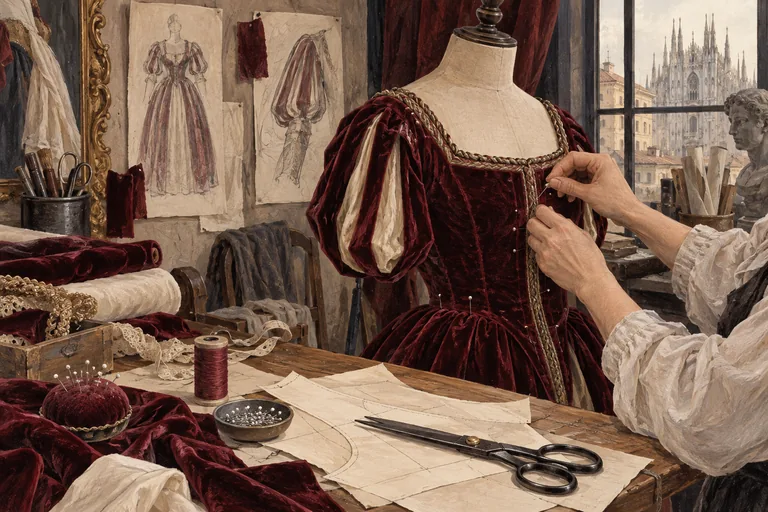
The Victoria and Albert Museum’s textile collection brings many of those techniques into view. As you look, identify the level of the question you are asking: material, construction, decoration or later treatment. A label that answers one level does not necessarily answer all the others. “Silk,” for example, does not by itself describe the appearance of every possible silk fabric.
Notice repeated relationships between threads
At a permitted viewing distance, look for repeated crossings or a directional rhythm. Plain weave offers a straightforward interlacing pattern; other woven structures organize the relationship differently. The V&A’s reflection on plain weave is a useful reminder that a simple structure can still be visually rich.
Do not diagnose an exact weave from shine alone. Yarn characteristics, density, color and finishing can all affect the surface you perceive. Nor should a decorative diagonal automatically become a technical identification. If a museum label or knowledgeable specialist names the structure, use that information to look again and ask what visible evidence supports it.
Let movement reveal something a flat photograph cannot
In a shop, ask permission before handling a garment or sample. Observe how it hangs, then how it returns after a gentle movement appropriate to the item. Notice the scale of the folds rather than using a single word such as “soft” for every sensation. Compare two fabrics in similar lighting when possible.
In a museum, looking replaces handling. Move your viewpoint within the permitted visitor area and watch how light crosses the surface. Never touch an object or lift a displayed hem to satisfy curiosity. A fold can tell you something about drape, but the display support and conservation arrangement also influence what you see.
Remember that weaving is not the end of production
The Museo della Seta’s visitor route distinguishes weaving, dyeing, printing and finishing within a broader production sequence. That is a valuable correction to the idea that a textile emerges from the loom already possessing every quality of the finished garment.
Ask how a surface effect was achieved and how it should be cared for. A glossy finish does not establish fibre content, place of manufacture or durability. Equally, a matte appearance does not imply a simpler or less considered process. Our garment-quality guide connects those questions with construction and intended use rather than treating sheen as a ranking system.
Connect Milan with the production story carefully
Our Como silk introduction gives a regional context, but a textile sold in Milan is not automatically made in Como. Read the actual label and any traceable information supplied by the maker. Keep design location, manufacturing location and retail location distinct.
If you plan a museum visit in Como, use the institution’s current visitor information to confirm opening and group arrangements. Treat it as a separate excursion with its own transport planning. A general lake trip may spend no time in a textile museum, even when the destination is famous for silk.
Take a better question into the next experience
Compare fashion and shopping experiences by the expertise and activities they actually describe. If textiles are your priority, ask whether the visit includes discussion of materials or merely a sequence of retail stops. No shopping booking includes official Fashion Week entry unless a separate authorized organizer has explicitly confirmed that access.
Before buying, connect what attracts you with what you need: how the piece will be worn, packed and cared for. A short note about texture, construction or an illuminating explanation can be as valuable as another photograph. The result is a more attentive relationship with cloth, and a Milan visit shaped by curiosity as well as style.
Sources & further reading
Turn a good read into a great day.
Find a highly rated Milanese experience that brings these stories to life.
Explore related experiences →