What can lace at Milan’s Poldi Pezzoli teach you about dress?

A small accessory can hold your attention as completely as a spectacular silhouette. Lace asks you to notice the relationship between thread and empty space: a border may seem weightless from a distance, then reveal a surprisingly deliberate structure when you look closely. For a fashion-minded visit to Milan, this is a rewarding change of scale from shop windows and architectural façades.
The Poldi Pezzoli offers a useful setting for that attention. Its official museum map identifies a Lace Room with drawers containing lace, embroidery and fans from the sixteenth to twentieth centuries. Displays can change, so treat the map as an introduction and ask staff what is accessible during your visit. Never open a drawer unless its use is clearly permitted.
Look at the spaces as well as the threads
Begin with the overall outline. Is the edge scalloped, straight or built from repeated shapes? Then choose a small area and follow how a motif relates to its surroundings. A flower may matter less initially than the way its outline is connected to the rest of the fabric. This is a looking exercise, not an attempt to identify a technique from a quick glance.
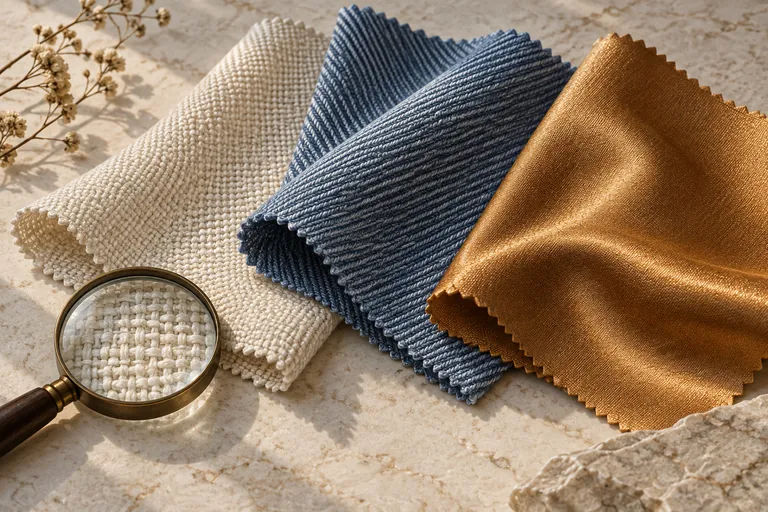
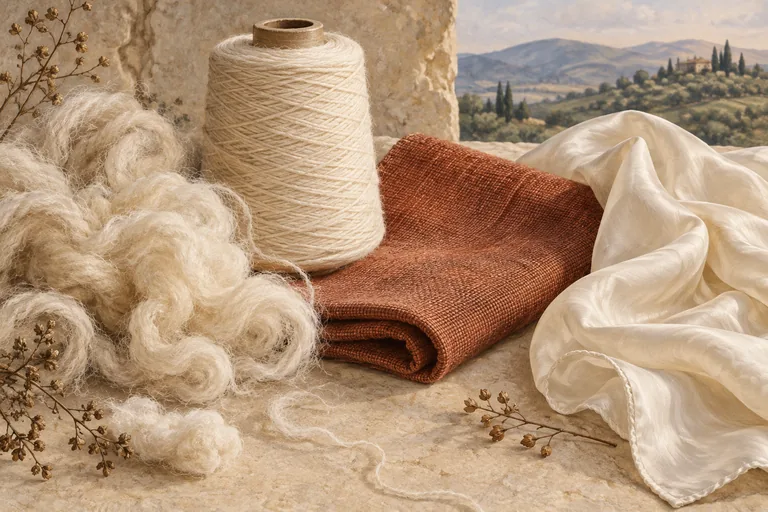
Our introduction to fibre, yarn and fabric helps keep different kinds of description separate. Material, construction and decoration answer different questions. An object label may establish one of them without resolving all three, and a responsible interpretation can acknowledge what remains uncertain.
Avoid a shortcut from appearance to origin
A familiar pattern does not prove where an object was made or who wore it. Read the label carefully for distinctions between place of production, date, material and later ownership. If the wording includes uncertainty, preserve it in your own notes. A question mark is useful information, not an inconvenience to smooth away.
The V&A’s discussion of Grinling Gibbons’ carved lace offers an instructive comparison: a textile could be admired and represented in another material. It describes carved imitations of Venetian needle lace. That example should not be used to attribute an unrelated Milan museum object, but it shows why the visual language of dress can travel beyond actual garments.
Think about a fragment’s missing context
A detached border cannot tell you everything about the ensemble it once accompanied. Consider what you would need to know: its placement, the fabric beside it, the wearer’s movement and the occasion. The missing context is part of the object’s story. A restrained description can be more evocative than an elaborate scene assembled without evidence.
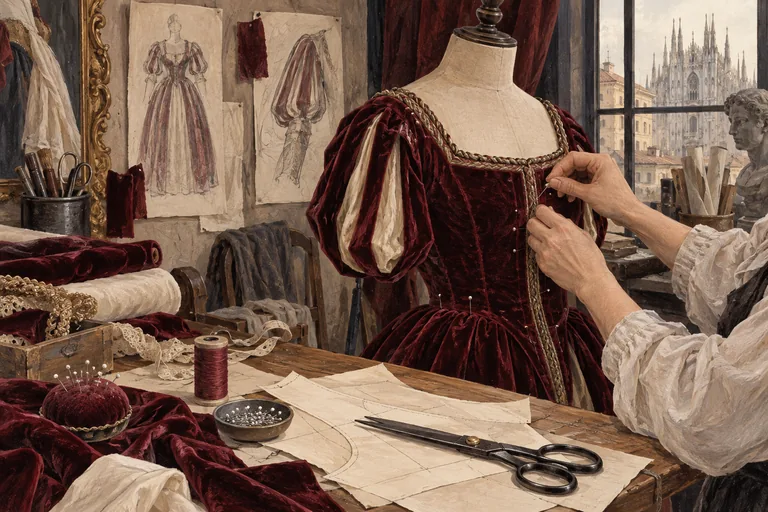
Our article on mounting historic clothing explains why display choices affect how we see dress. A flat piece and a supported garment answer different questions. Neither is a transparent window into a complete past life; both deserve attention to the information the museum provides.
Give accessories their own viewing time
Fans, lace and embroidery are easily reduced to decorative extras during a fast museum circuit. Instead, allocate a deliberate pause to one small object. Compare its scale with your own hand from a respectful distance, without touching the case. Imagine the practical questions its use might raise, but keep those imaginative responses separate from historical claims.
For a broader day around material culture, browse our Milan fashion and cultural experiences and read inclusions closely. A shopping experience does not automatically include the Poldi Pezzoli, a textile collection visit or access to objects in storage. Specify your interests before booking a guide so the proposed route has a clear purpose.
Finish with one useful observation
Consult the museum’s current visitor information for opening arrangements, tickets and group requirements. Its Via Manzoni location makes it possible to combine the museum with the approach in our Via Manzoni planning article, while leaving enough time to absorb what you have seen.
Choose one observation to take into the rest of your Milan visit: perhaps how a border controls a silhouette or how openwork changes the impression of a surface. You do not have to become a lace specialist in an afternoon. Learning to give a modest detail sustained attention is already a more discerning way to encounter fashion, whether behind glass or in a contemporary window.
For a further textile comparison, the Lake Como guide to looking at looms in Como’s Silk Museum shifts attention from an accessory to production. That is a separate journey to Como city, worth planning with its own travel time.
Sources & further reading
Turn a good read into a great day.
Find a highly rated Milanese experience that brings these stories to life.
Explore related experiences →