Milan fashion archives: how do you compare a sketch with a finished look?

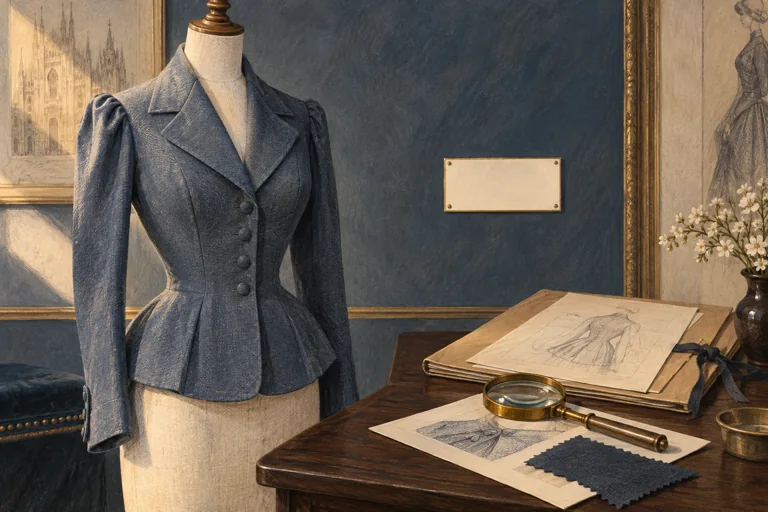
A fashion sketch can seem to explain a garment at a glance. A few lines suggest the shoulder, a shaded area gives weight to a sleeve, and a long stroke makes cloth appear to move. A photograph of a finished look offers another kind of evidence. Comparing the two can make an archive visit unusually rewarding, provided you begin with a careful question: are these records actually documenting the same design, and what does each one allow you to know?
Milan offers ways to explore that question through public digital resources and museum-based research facilities. They are not all the same service. A selection available online does not imply access to an entire company archive, and a museum research terminal does not mean visitors can handle original drawings or garments.
Read the record before interpreting the image
Start with the supplied date, collection, description and type of material. Is the image identified as a sketch, a runway photograph, a campaign or another kind of record? If two items are not explicitly linked, treat their resemblance as a possible comparison rather than proof that one developed into the other. Similar silhouettes can recur across several seasons.
The Armani Archivio’s account of its purpose describes a public project drawn from the company’s history and its archival work. Its online presentation offers a way to study selected material remotely. Read that selection as a curated account with a particular institutional perspective. It can be informative without representing every document, decision or contributor in the history of a collection.
Ask what the drawing emphasizes
A sketch may give special attention to proportion, a surface effect or the impression of movement. Look at where the line becomes precise and where it stays suggestive. A sleeve drawn with a few loose marks does not necessarily tell you how it was patterned or assembled. Do not treat an expressive drawing as a technical production document unless the record identifies it as such.
Then compare a clearly related photograph, where one is supplied. How does the shoulder sit on a body? Where do folds appear? What remains difficult to judge from one camera angle? Lighting, pose and movement all affect a photograph. The aim is not to announce that the drawing was correct or incorrect, but to see how an idea and a documented appearance answer different questions.
Keep material claims proportionate to the evidence
A dark area in a drawing may indicate shadow rather than a different fabric. A glossy photograph may make a surface appear smoother than it would in ordinary light. Use the catalogue’s material description when one is provided; otherwise describe the visible effect rather than naming a fibre with confidence. Our guide to weave and finish explains why several different choices can produce superficially similar appearances.
If your journey also includes Como, the Como Silk Museum guide offers a complementary emphasis on making. Keep the connection at that level. A textile process described in a museum does not establish how a particular archived garment was made unless documentation connects the two.
Distinguish online browsing from an in-person appointment
Armani/Silos’ digital-archive visitor page describes research facilities within the museum and explains its booking arrangements. It distinguishes a standalone archive visit from admission to the collection or exhibitions. Check the current terms, available times and any separate ticket requirements before travelling. Do not assume that a research booking provides a general museum visit or that a terminal will be free whenever you arrive.
Follow the archive’s current rules about copying, downloading, photography and use of material. A resource being publicly viewable is not the same as permission to reproduce it. For your own notes, a record title, date and a short description of the question you explored may be more useful than collecting images without their context.
Finish with a comparison you can explain
Our guide to maker, wearer and donor information helps keep people and roles distinct. The article on Armani and the softer silhouette provides a wider historical starting point. Use both as prompts for looking, while letting the actual archive records set the limits of your conclusion.
Allow time afterwards to write one clear comparison: what the sketch proposed, what the photograph shows, and what remains unknown. Browse Milan’s design and culture experiences for the rest of your day, checking each inclusion separately. An archive rewards precision. Leaving with a better question about one carefully identified look can be more valuable than scrolling past a hundred unfamiliar images.
Sources & further reading
Turn a good read into a great day.
Find a highly rated Milanese experience that brings these stories to life.
Explore related experiences →