Armani and the softer silhouette: a Milan fashion history to look at closely
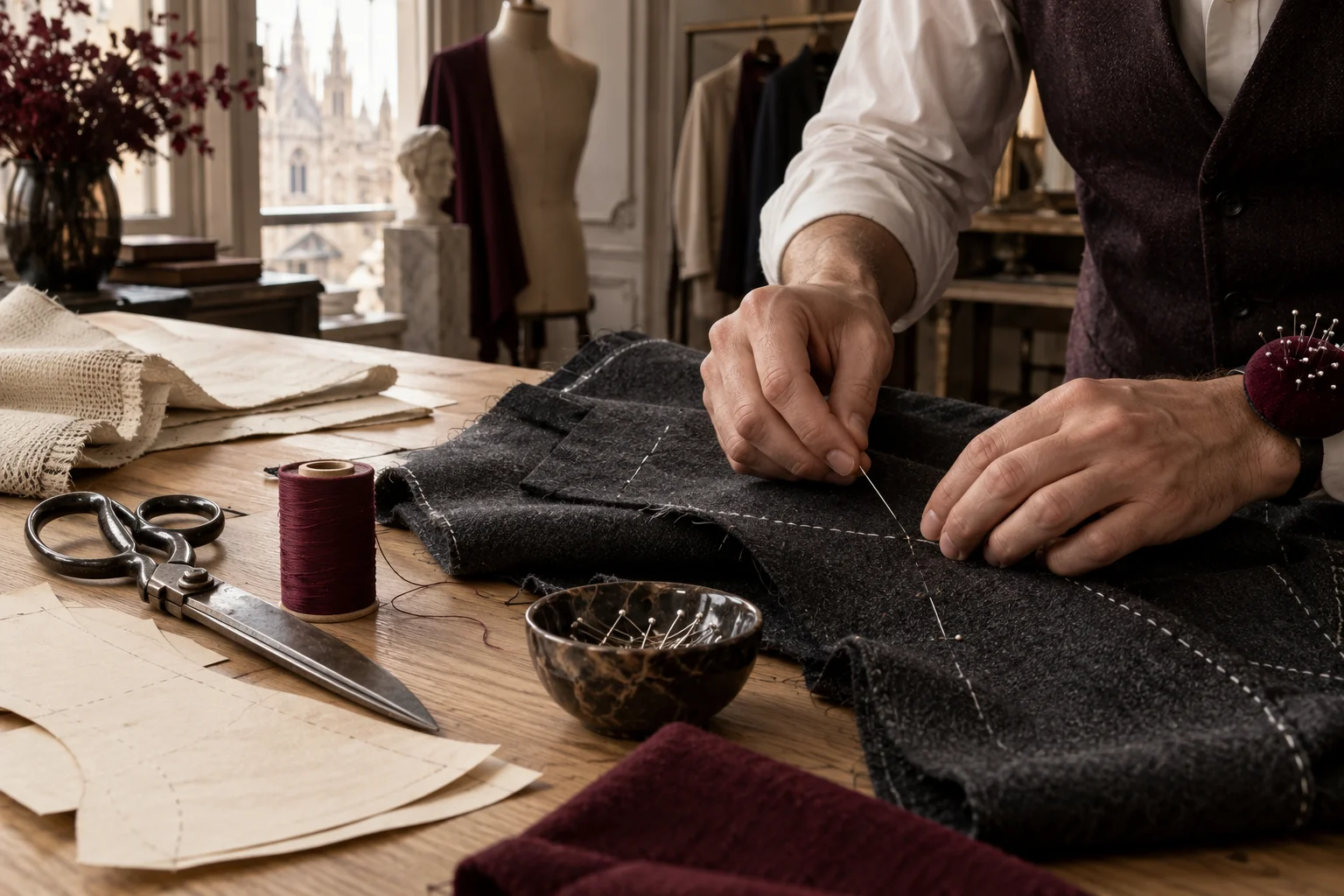
A jacket can change an outfit without announcing itself loudly. Its shoulder, weight and relationship to the body can alter how the wearer stands and moves. That is a useful way into Giorgio Armani’s place in Milan fashion: look closely at construction and proportion before reaching for a familiar slogan about elegance. The point is not to decide that one kind of tailoring is superior, but to see that apparently quiet clothes can carry strong design decisions.
The official Armani archive places the house’s beginnings in 1975 and describes the importance of softer, deconstructed tailoring in its early development. This is the company’s account of its own history, valuable as a primary source and best read with that perspective in mind. It provides a starting point for looking, rather than a requirement to praise every garment in the same terms.
Start with the shape, not the label
Choose one archived look and describe it without using the designer’s name. Where does the shoulder end? How does the jacket meet the waist? Does the fabric appear to hold a crisp outline or follow the body more readily? What happens where the sleeve joins the torso? These are observation prompts, not conclusions about hidden construction. A photograph cannot reveal every layer inside a garment.
Then compare a second look from another year. Resist treating several decades as a single, unchanging style. A house may revisit a concern while changing colour, volume, texture or the way pieces are combined. Our guide to judging a well-made garment gives you a more practical version of this exercise for clothing you can examine with a retailer’s permission.
Use the archive as a sequence
Archivio Armani explains its archive project and its relationship to the house’s history. Browse with a question instead of trying to absorb everything. You might investigate trouser proportions, evening fabrics or the relationship between a long coat and the layers beneath it. Save a small set of references with their dates, so you can tell later whether a contrast belongs to a different collection or merely to a different photograph.
Pay attention to what the source does not establish. An editorial photograph shows a styled ensemble; it does not tell you that everyone in Milan dressed that way. A runway image records a particular presentation, not the entirety of a season’s commercial production. Keeping those distinctions visible makes fashion history more interesting, because the relationship between an idea and everyday dress becomes a question to explore.
Plan an exhibition visit on its own terms
For a visit to Armani/Silos, check the current programme, ticket conditions and opening information directly. Do not build the day around an assumed permanent display of a particular jacket. Exhibition spaces can present different selections and themes, and the experience offered on your date matters more than an old photograph of the interior.
Read exhibition labels as carefully as you look at silhouettes. A curatorial grouping can place objects beside one another to make an argument. Ask what the arrangement encourages you to notice and what other comparison you might make. Our Palazzo Morando guide considers a different kind of collection visit, where rotating costume displays sit within a civic museum setting.
Avoid a tidy battle of Milanese styles
It is tempting to divide designers into opposing camps: restraint on one side, spectacle on the other. Such labels can be useful first impressions, but they quickly flatten complex work. Read our Versace essay and compare a specific garment with a specific garment. Look for differences in line, surface and intended effect before assigning an entire career to a mood.
Milan Tour Hub’s arts and cultural experiences can help you add another form of making to the day. A painting, a piece of furniture or a stage costume may sharpen your eye for proportion without needing to prove a direct influence on a designer. Let the comparison remain an exercise in looking when the historical connection is undocumented.
Bring the observation home
After the visit, inspect a jacket you already own. Notice how it feels when seated, where its pockets sit and whether the shoulders allow comfortable movement. You do not need to imitate an archived look to learn from it. A successful fashion-history afternoon can leave you with fewer sweeping adjectives and a more precise understanding of why one garment feels different from another.
Sources & further reading
Turn a good read into a great day.
Find a highly rated Milanese experience that brings these stories to life.
Explore related experiences →