Versace and visual drama: a thoughtful guide to looking beyond the logo
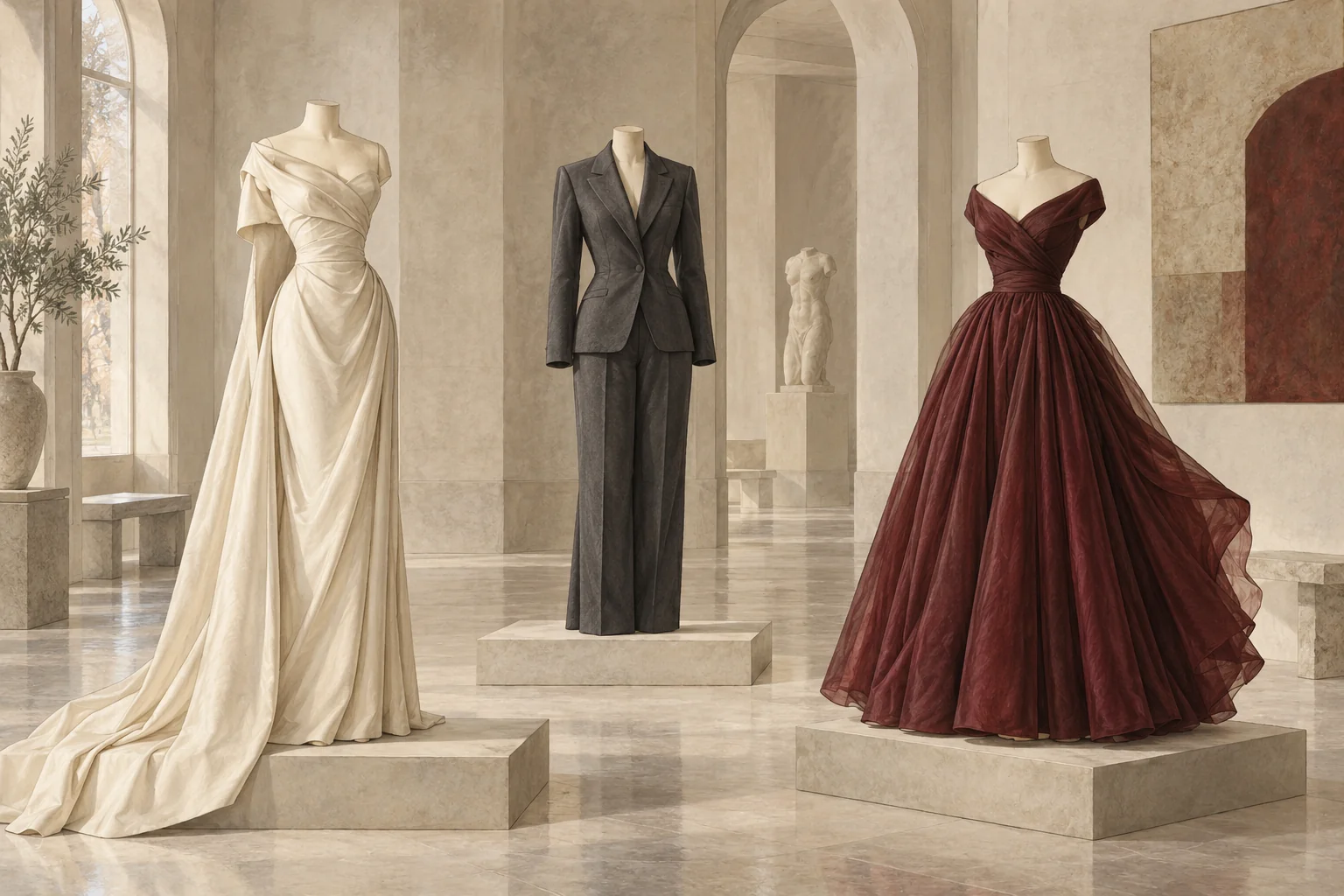
A memorable fashion image can become so familiar that it stops being looked at. With Versace, the temptation is to recognize a name, register drama and move on. A more rewarding approach asks how that drama is constructed. Surface, proportion, colour, movement and technical choices all deserve attention. You can investigate them without deciding in advance whether the result matches your own wardrobe.
The house’s official company profile identifies its founding by Gianni Versace in 1978 and presents a creative identity connected with classical references and Italian craftsmanship. That is the brand’s own account, not a neutral description of every object it has produced. Use it as one source, then turn to a specific, dated garment that lets you test broad language against visible detail.
Begin with one documented dress
The Metropolitan Museum of Art records a Gianni Versace evening dress from fall/winter 1991–92 in silk and metal. Its curatorial description discusses the combination of padded satin work with finely pleated lace. The object belongs to the museum in New York; this online record is a study resource, not a claim that the dress is on display in Milan.
That combination gives you a concrete question: what happens when materials with different visual and structural qualities meet? Look at the museum images and follow the transitions between surfaces. Where does the eye pause? Which areas appear to hold a shape, and which suggest movement? Describe what the photograph permits you to see, while leaving unseen construction unresolved.
Let technique complicate the first impression
A striking design may rely on patient, exact work. Visual exuberance does not tell you that an object was simple to make, just as a restrained surface does not prove technical complexity. Our guide to assessing garment construction encourages the same distinction in a shopping context. The useful question is what has been done and how well it serves the object.
Try sketching the outline of a garment before adding any pattern. Then draw a separate diagram of its strongest surface contrasts. The exercise separates silhouette from decoration, even when the finished effect depends on both. It can also reveal why a close-up and a full-length photograph tell different stories about the same piece.
Compare careers without reducing them to teams
Read our Armani essay alongside this one, but avoid turning the comparison into quiet versus loud. Select particular examples and ask the same questions of each. How is the body framed? Where does fabric fall away from it? What relationship is established between an individual detail and the complete ensemble?
This is a method of looking, not a claim that the designers had identical ambitions or directly answered one another in the examples you choose. A good comparison can illuminate differences while preserving uncertainty. It should not require every garment by one house to behave as a perfect opposite of every garment by another.
Bring theatre into the conversation carefully
Teatro alla Scala’s Ansaldo Workshops information describes production departments that include costume making and offers information about arranged visits. A workshop visit, if available for your date, can make the labour behind spectacle more tangible. Read the actual visit description and booking requirements rather than assuming access to every department or a particular costume.
The connection here is a question about making clothes for bodies seen by an audience. It is not a promise that a Versace object will be present, nor evidence that a theatre costume and a fashion garment serve identical purposes. Stage distance, repeated performance and character can shape a costume’s requirements in ways that differ from other forms of dress.
Build a visit around curiosity
Our guide to reading clothes in Renaissance portraits offers a much earlier example of appearance designed for an audience. Compare a portrait, a documented dress and, if your schedule allows, a performance. Milan Tour Hub’s arts and events collection can help identify bookable cultural options; verify precisely what each ticket includes.
You do not need runway admission to make these connections. A library of carefully dated online references, one museum visit and a patient walk through Milan can produce a richer understanding than a hurried attempt to collect recognizable names. Leave room for surprise: the feature you remember may be a seam, a fold or a technical solution you had previously overlooked.
Sources & further reading
Turn a good read into a great day.
Find a highly rated Milanese experience that brings these stories to life.
Explore related experiences →