Milan’s Castiglioni studio: what can ordinary objects teach a fashion visitor?

A fashion-minded Milan visit does not have to move continuously between clothes. A lamp, a stool or an unassuming everyday implement can sharpen the same habits of attention: noticing how something is held, where its weight falls and whether its appearance follows its use. The Studio Museo Achille Castiglioni offers a particularly focused setting for that kind of thinking. Its appeal is the chance to follow design questions inside a working history, rather than simply accumulating photographs of celebrated objects.
Book the studio as a specific visit
The foundation is at Piazza Castello 27. Its official visitor page requires advance reservation and a guided visit; this is not a museum to enter casually between appointments. The published format is approximately an hour, with scheduled morning visits from Tuesday to Friday and a selected Saturday each month. Confirm the actual slot, language, payment terms and any access needs with the foundation before fixing the rest of your day.
The studio’s scale is part of the experience. A reservation gives the guide and visitors a workable way to move through it. Arriving with a modest bag, a charged phone for your booking details and a little spare time is more useful than treating the appointment as another address to squeeze into a crowded fashion itinerary. Our guide to balancing museums in a fashion day helps keep that ambition realistic.
Look for a question before looking for a signature
The foundation describes a route through rooms containing prototypes, models, drawing equipment, anonymous objects and design pieces. Its archive work also encompasses drawings, photographs and other records. These different kinds of material should not be flattened into a single category of “finished design”. A model can test a possibility; a drawing can document a stage; a manufactured object can show how a decision survived production.
Try asking a simple question about whichever example the guide chooses: what problem was being addressed? Then look for the part that carries the answer. It might concern balance, storage, assembly or the way a hand meets a surface. You need not turn every object into a metaphor for fashion. The useful connection is the discipline of looking at construction before deciding that an appearance is merely stylish.
Let anonymous objects complicate the story
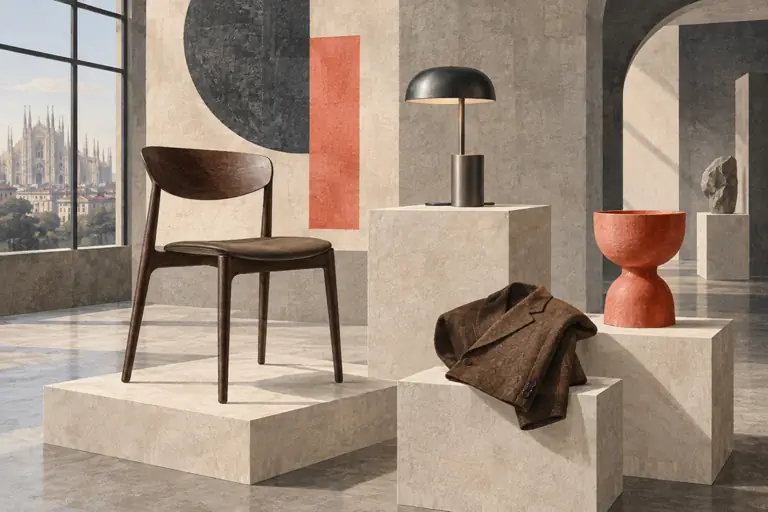
The foundation specifically identifies the everyday objects Castiglioni gathered and used in teaching. That makes an important counterpoint to a city visit driven entirely by famous names. An object may work elegantly without announcing its designer. Ask what is efficient or surprising about its form, and what evidence supports the explanation. A familiar mechanism can become interesting once you stop overlooking it.
For a later shop visit, translate that curiosity into practical questions. How does a fastening operate? Can an opening be reached comfortably? Does a bag remain balanced when it is used rather than arranged for display? These are observations about function, not a claim that a particular garment descends from Castiglioni’s work. Our introduction to judging garment construction keeps the comparison grounded in the item in front of you.
Distinguish the object from its presentation
A guided studio visit necessarily selects what you see and explains why it matters. Enjoy the stories while remaining curious about their evidence. Does the account refer to a dated drawing, a prototype, a photograph or a recollection? Those sources answer different questions. Our guide to comparing a sketch with a finished look offers a related exercise for fashion archives. Neither a drawing nor an anecdote should be made to prove more than it can.
If you want a broader museum comparison, our sister publication’s Triennale guide considers design in a different institutional setting. Keep admissions and journeys separate. A studio appointment does not automatically include another museum, and a nearby building on a map does not guarantee time to give both visits proper attention.
Keep Fashion Week access separate
For visitors planning around the next official editions, CNMI currently lists men’s dates of 15–19 January 2027 and women’s dates of 23 February–1 March 2027. Its invitation-only access notice remains distinct from cultural sightseeing. A design studio visit, shopping experience or custom itinerary does not provide runway entry, accreditation or backstage access.
Browse our design and culture experiences by their stated content, and make the studio booking directly through its published arrangements. The reward of this detour is a more attentive eye: one that can enjoy an extraordinary object while also noticing the intelligent decisions hidden in an ordinary one.
Sources & further reading
Turn a good read into a great day.
Find a highly rated Milanese experience that brings these stories to life.
Explore related experiences →