Milan fashion looking: how does a gusset make room for movement?

A small extra piece of cloth can change how a much larger garment behaves. That is the pleasure of looking for a gusset: the detail may be discreet, yet it invites a practical question about the body inside the clothes. Where does the wearer need room to lift, bend or reach, and how has the maker provided it? A considered Milan fashion visit can begin with that question rather than a label or a price.
A gusset is an inserted piece used to provide shape or room at a particular part of a garment. Its job depends on its position and construction. Do not assume that every small triangular patch has the same purpose, or that an added panel automatically indicates exceptional quality. As with our guide to judging a garment, the useful habit is to connect a visible detail with a specific function, then acknowledge what you cannot establish by looking.
Start with one surviving shirt
The Metropolitan Museum of Art’s record for a French linen shirt dated about 1780 offers a concrete example. The museum explains that its underarm gussets allowed movement, while a shoulder gusset helped the cloth avoid pulling tightly across the neck and chest. It also identifies piecing that gave more fullness at the front without unnecessary bulk at the waist. These are observations about a particular surviving object, not a claim that every eighteenth-century shirt was identical.
The record is especially useful because it connects cut with use. Rather than stopping at “linen shirt,” imagine the difference between standing still and reaching forward. The example belongs to the Met’s collection in New York and is listed as not on view when checked; it is a digital reference for this looking exercise, not a promised exhibit in Milan. Its approximately dated French identity also supplies no evidence that this construction originated in Milan.
Follow the seams before naming the detail
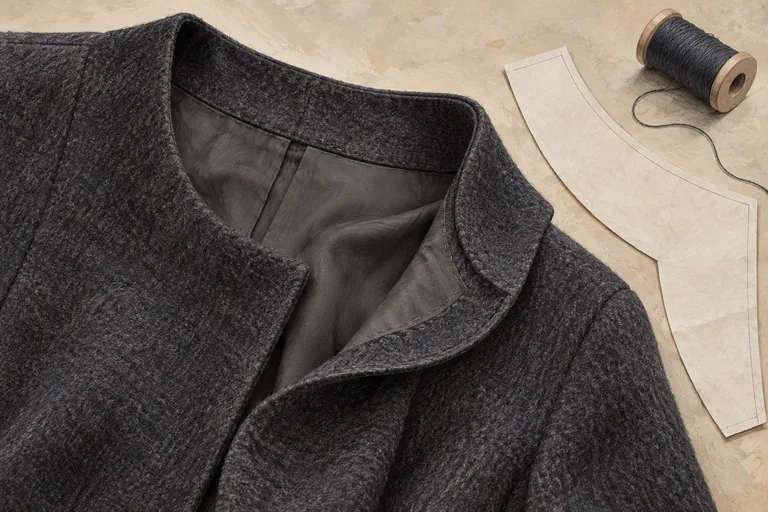
If you have permission to examine a modern garment in a shop, start with its overall arrangement. Find the body, sleeve and the seam where they meet. Then look for a separate piece, its outline and the seams that attach it. Does it sit beneath the arm, near an opening or somewhere else? Ask a member of staff to explain the construction if the cloth folds conceal the answer. Turning a garment inside out without asking is an unnecessary way to start the conversation.
A photograph can help you locate a seam but cannot supply every answer. Shadows may resemble stitching; a fold may conceal the edge of an insert; a patterned fabric may make the joins deliberately difficult to notice. A responsible note might read “possible insert beneath the sleeve” until a label, a clearer view or a knowledgeable explanation confirms it. Uncertainty is useful information, particularly when comparing historic clothes through glass.
How does this differ from a dart or a pleat?
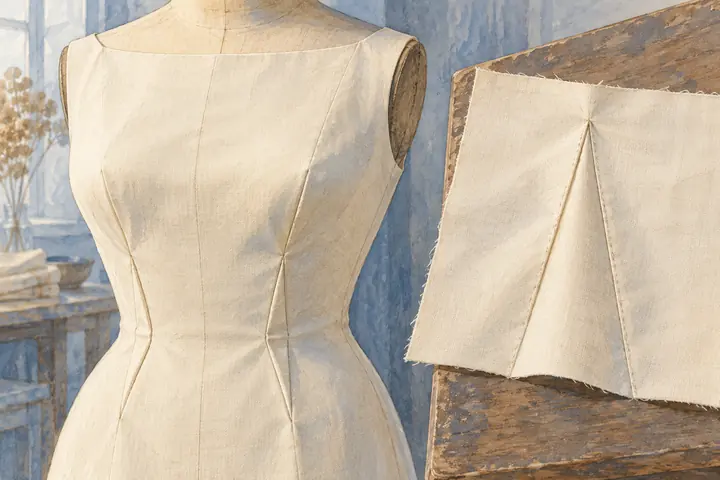
Compare three questions rather than treating the terms as decorative vocabulary. Is a separate piece being inserted? Is cloth being taken in along a shaped fold? Or is extra cloth arranged in folds that can lie together or open? Our articles on darts and volume and pleats and movement provide companion ways to look. Several approaches can appear in the same garment; finding one does not rule out the others.
This comparison is more useful than ranking techniques in isolation. The appropriate solution depends on the intended shape, fabric and use. A garment designed for a crisp, controlled silhouette poses different questions from something intended for expansive movement. Ask how the maker wanted the cloth to behave, then distinguish the answer you are given from what you can personally observe. A construction term becomes valuable when it makes that exchange more precise.
What should you notice during a fitting?
With a modern garment you are allowed to try, use ordinary movements appropriate to it. Notice how it feels when you sit, reach gently or return your arms to your sides. Do the collar and hem remain comfortable? Does the garment settle naturally afterwards? Ask about the intended fit and available sizes before attributing every sensation to a single insert. The gusset is one part of a larger pattern, and fitting is not a test in which one feature can earn the entire garment a perfect score.
Historic garments require a completely different approach: do not touch, lift or try to flex an object in a display. The visible result may depend on its mount and conservation needs. Milan Tour Hub’s ADI Design Museum introduction offers a useful parallel: looking at how something works does not require taking it apart. Observation and a well-phrased question can go a long way.
Carry the question into your Milan plans
Choose a single construction detail to remember during your next shop or museum visit. A quick sketch of the seam arrangement may record more than a vague judgement that a garment looked expensive. Include the object’s identity and the source of any explanation, and keep a separate note of your own interpretation. Over time, those small records become a personal vocabulary for looking.
Our Milan experience collection can help you arrange a fashion walk or wider cultural visit; check the listed route and inclusions. These activities do not provide runway entry. CNMI’s accreditation guidance distinguishes accreditation from invitations controlled by individual brands. A thoughtful fashion day needs no imagined backstage access: sometimes the most revealing subject is the few centimetres of cloth that help an arm move.
Sources & further reading
Turn a good read into a great day.
Find a highly rated Milanese experience that brings these stories to life.
Explore related experiences →