The Galleria and the art of being seen in modern Milan
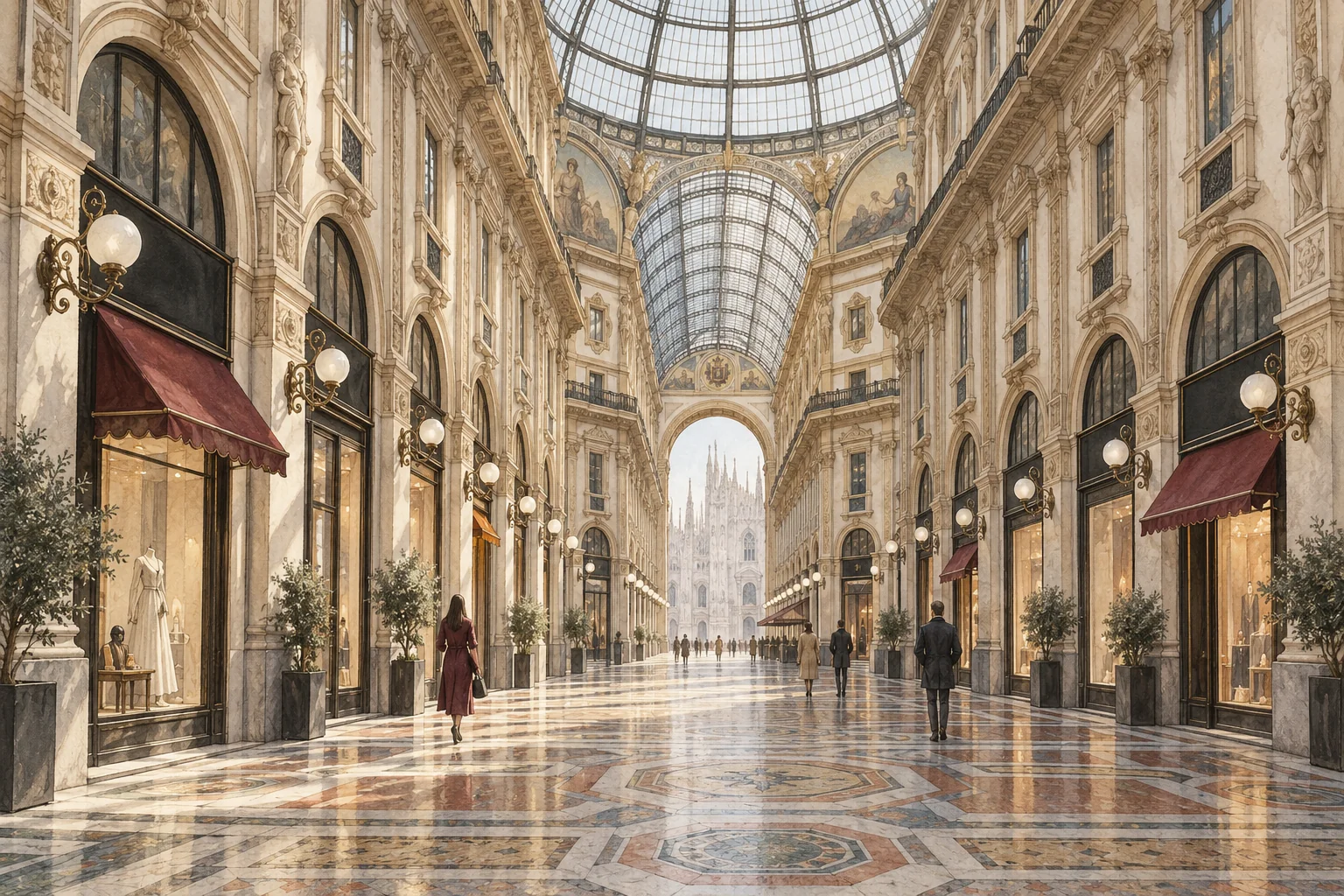
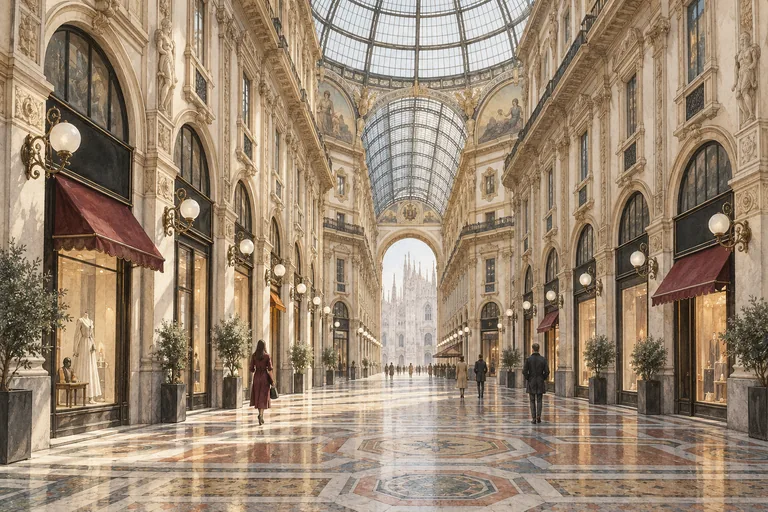
The Galleria Vittorio Emanuele II is more than a convenient covered passage between central Milan landmarks. It is a place where architecture frames movement, shop windows compete for attention and visitors become part of the view. For a fashion-minded walk, that makes it an interesting subject in its own right. You can study the relationship between objects, display and public space without needing to make a purchase.
YesMilano’s account of the Galleria places its foundation stone in 1865 and its inauguration in 1867, with Giuseppe Mengoni as architect. Those dates locate the project in a different Milan from the medieval cloth world or the Sforza court. Our fashion history overview keeps these periods distinct rather than presenting the city’s present identity as something unchanged across centuries.
Start by looking up, then look along
Find a position where you can pause without obstructing the flow of people. Notice how the roof, façades and long views draw your eye through the space. Then lower your gaze to the shopfronts. The scale changes: a monumental setting contains the smaller, carefully managed world of the window display.
Walk the same stretch in both directions if time permits. Reflections, light and the angle of approach can change which details become prominent. A photograph records only one of those views. Give yourself a few minutes without taking pictures so the visit does not become a search for an image you already expected to make.
Read a shop’s history with a date attached
The Prada Group’s June 2026 account of its Galleria space connects the location with the house’s first store in 1913 and describes its subsequent development. This is a useful example of a brand interpreting its own presence within the city. Check current retail information separately if you intend to enter or arrange an appointment.
Our Prada and nylon essay follows another part of that history through materials. Place the two stories beside each other without assuming that a present interior reproduces exactly what a customer encountered in 1913. A historic address and a changing commercial space can coexist; one does not cancel the other.
Consider what a display asks you to notice
Choose a window and identify its focal point. Is attention directed by colour, empty space, repetition or a contrast in scale? What can you understand from a distance, and what only becomes visible nearby? These questions are useful whether the object is a bag, a garment or something unrelated to fashion.
Then compare a second display rather than deciding immediately which is better. Different arrangements may serve different purposes. Our Quadrilatero walk extends this exercise into other streets, where the relationship between the building and the display changes. Keep the comparison descriptive unless you have evidence about the team’s actual intentions.
Remember that the public setting has other users
A beautiful passage is also a route used by people with somewhere to go. Keep entrances and walking lines clear, ask before photographing individuals closely and follow any posted instructions. A table, a shop interior or a private event area should not be treated as freely available simply because it sits within a famous visitor setting.
Fashion Week does not change those basic distinctions. Our invitation and access guide explains why being near a fashion-related location is different from being admitted to an event. Build the walk around what is publicly accessible, and treat any separately confirmed booking according to its actual terms.
Connect the walk to one cultural anchor
The wider central area offers enough possibilities to fill a day, but choose one substantial visit rather than attaching every nearby attraction. If a performance at La Scala interests you, use the theatre’s official ticket information. A museum visit, a theatre tour and a performance ticket are distinct offerings; read what you are booking.
Our three-day fashion itinerary helps place this central walk within a broader stay. Milan Tour Hub’s day-planning guide adds other city interests for companions whose enthusiasm for window displays may be more limited. Finish with a pause somewhere that suits your appetite and budget. The Galleria’s most useful lesson is not that style requires buying something, but that surroundings can change how we see an object, a person and ourselves.
Sources & further reading
Turn a good read into a great day.
Find a highly rated Milanese experience that brings these stories to life.
Explore related experiences →