A slow architectural walk around Milan’s Corso Venezia

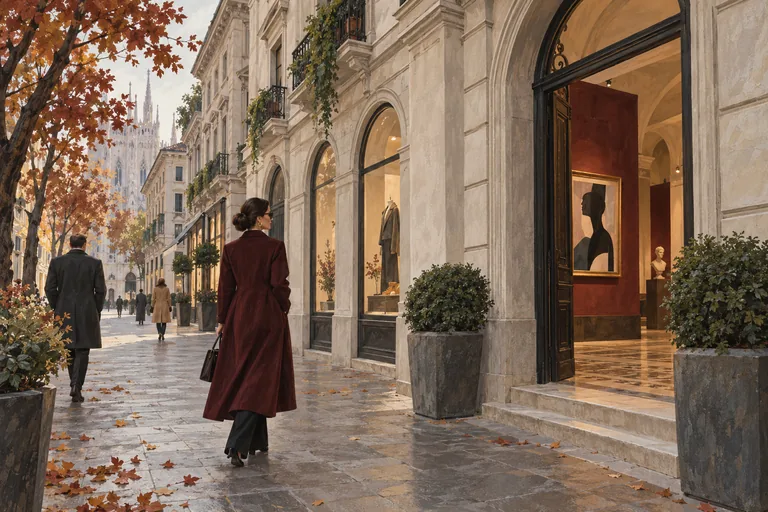
A fashion-focused Milan visit benefits from time spent looking above the shop window. Around Corso Venezia, architecture offers another vocabulary of surface, proportion, texture and display. You can make a rewarding walk without treating every doorway as a potential attraction or assuming that a handsome building is open to visitors.
Keep the route modest and choose one confirmed interior if you want one. The rest can be an exercise in looking from public space. This gives the walk a clear shape while preserving the pleasure of discovery: a detail of ironwork, a change in stone or the way a façade organizes the street.
Look at Palazzo Castiglioni from the street
Confcommercio Milano’s history of Palazzo Castiglioni identifies Giuseppe Sommaruga’s building on Corso Venezia as an important example of Liberty architecture. This Italian expression of Art Nouveau makes a useful subject for a close but respectful exterior study.
Begin with the whole façade. Notice how its base establishes weight, then follow the distribution of openings and ornament upward. From an appropriate public position, choose one repeated element and compare it with its neighbors. Are the repetitions identical, or does the design vary them? The point is to look at relationships before rushing to name a style.
Palazzo Castiglioni is used by an organization, not presented as a permanently open house museum. Do not assume that its entrance, stair or meeting rooms are available for casual inspection. If a specific public event offers interior access, use that event’s confirmed arrangements. Otherwise, let the exterior be the visit.
Add Villa Necchi only with a real visiting plan
Nearby streets lead to a different chapter of Milanese domestic design. FAI’s official Villa Necchi Campiglio page places the house on Via Mozart and credits Piero Portaluppi’s design, built between 1932 and 1935. Its interwar setting provides a useful contrast with the earlier architectural language encountered around Corso Venezia.
FAI’s architectural account of the villa explains why the house matters as a designed environment. On a visit, look at how rooms, thresholds and views establish a way of living. Avoid assuming that a domestic interior tells a universal story about Milan: this is a particular house, shaped by particular resources and choices.
Check the current admission, visiting route and any temporary exhibition before booking. Garden access, house admission and special events can have different conditions. A Fashion Week trip does not itself create access to a private event at a historic venue, even if that venue also welcomes ordinary visitors at other times.
Use a fashion eye without forcing an analogy
Architecture and clothing share words such as structure, surface and proportion, but the comparison works best as a looking exercise. Notice the relationship between a strong frame and a delicate detail, or between a repeated rhythm and an unexpected interruption. You do not need to claim that a designer borrowed directly from a building unless a reliable source establishes that connection.
Carry a small notebook if it helps. Record a shape, a material and a question at each stop. A few careful observations are more useful than dozens of photographs taken without remembering why. Respect people using entrances and windows, and avoid photographing private interiors through open doors.
For mobility or sensory needs, assess the walk and the house visit separately. Pavements, crossings and busy junctions shape the outdoor experience; room access and steps shape the interior one. Contact the venue about the specific route you want, rather than relying on the general impression that the neighborhood looks easy to navigate.
Keep the wider day coherent
Our Quadrilatero guide helps turn shopping streets into a considered walk. Via Manzoni and a museum visit offers another nearby planning approach. Choose between them or connect only a manageable portion; neighboring places can still produce a tiring day when every possible stop is included.
For another historic interior, read our Bagatti Valsecchi guide. Its subject is different from Villa Necchi’s, and each rewards time. One well-chosen house museum followed by a relaxed meal often leaves a stronger impression than two rushed interiors.
Compare Milan neighborhood experiences by the actual route, guide focus and admissions. Ask whether an advertised building is an exterior stop or a confirmed interior visit. Clear expectations let the guide spend time interpreting the city instead of explaining a misunderstanding at the entrance.
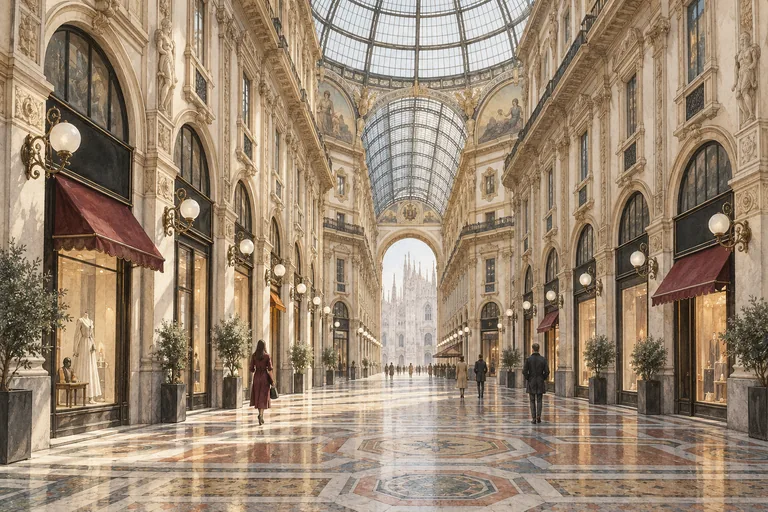
The wider city’s guide to the Galleria’s glass and iron extends this architectural way of seeing. Across both walks, the reward is the same: Milan becomes more than a sequence of appointments, because the spaces between them begin to carry meaning.
Sources & further reading
Turn a good read into a great day.
Find a highly rated Milanese experience that brings these stories to life.
Explore related experiences →