Milan fashion looking: why does a designer make a toile before the finished garment?

A toile can look unfinished because being finished is not its job. In fashion, the term commonly describes a cloth prototype used to work through a garment before its final version. Seams, pins and adjustments may remain conspicuous. Rather than dismissing those marks as flaws, ask what problem the maker was trying to solve. A prototype makes some of the thinking visible that a polished garment is designed to conceal.
The Metropolitan Museum’s Manus x Machina material, published for its 2016 exhibition, describes the toile as a preliminary three-dimensional sketch. That is a useful image, provided it is not treated as a rigid recipe followed by every designer. Materials, stages and working habits vary. The museum source explains a process; it does not establish that a particular prototype is currently displayed in Milan or that visitors can enter a designer’s workroom.
Understand the difference between flat and three-dimensional
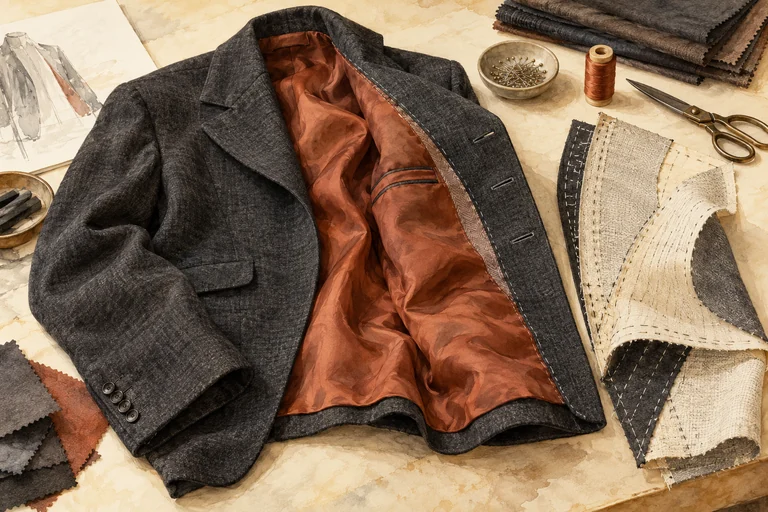
A paper pattern organises shapes that will become a garment. A toile lets those shapes meet a body or a form in space. A line that looks convincing on a table may behave differently when it curves around a shoulder, hangs from a waist or moves with an arm. The prototype makes it possible to examine those relationships before every decision is committed to the final material.
Our guide to comparing a sketch with a finished look makes a related distinction. A drawing can suggest an effect without specifying every construction step. A cloth experiment can reveal practical questions that the drawing leaves open. Neither is automatically more truthful than the other; they are different kinds of evidence. If both survive, the interest lies in comparing what each records rather than forcing them into a tidy story of effortless invention.
Read a change as a question, not a confession
An altered seam or a pinned adjustment may record a trial. It does not necessarily prove that an earlier version was a mistake, or that the visible arrangement was the final approved design. Ask whether a museum label identifies the object as a working prototype, an example prepared for an archive, or something else. A photograph alone may not answer that question.
The Met’s own account of Charles James muslins provides a documented example of cloth models within a designer’s process. It belongs to a specific maker and collection, not to an anonymous universal backstage world. Use it to understand what such objects can reveal, then return to the evidence for the particular garment in front of you. Do not assign James’s methods to another designer merely because both worked with pale cloth.
The test fabric has its own behaviour
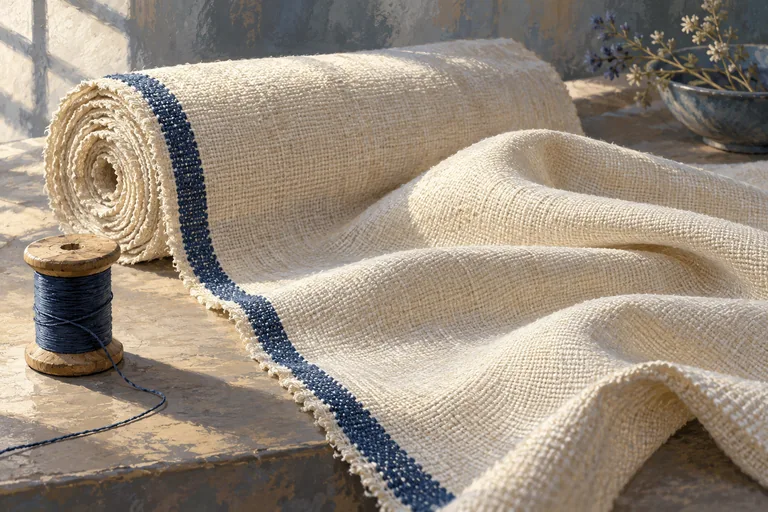
Plain fabric can make lines and adjustments easier to see, but a prototype material and a finished fabric need not fall in the same way. Weight, structure and surface can affect the result. This is a reason to ask how the prototype was used, not to invent a technical account from a photograph. Without a maker’s notes or a specialist description, some stages of the process will remain uncertain.
When shopping, the useful extension is practical. Ask about fittings, the number of appointments, the scope for alteration and what approval means before commissioning work. Our guide to evaluating a well-made garment provides a broader set of questions. A promised fitting is not identical to a promised toile, and neither should be inferred from an elegant showroom. Confirm the actual service in writing when it matters to a purchase.
Keep design evidence separate from conservation work
Museums also make cloth copies for other purposes. A Victoria and Albert Museum conservation account describes calico toiles used to develop fitted supports for fragile historic vestments, reducing the need to handle the originals. That is later conservation work around historic objects, not evidence that their original makers used those particular copies. Similar-looking materials can belong to different moments and entirely different tasks.
This distinction helps when reading exhibition labels. Who made the object, when, and for what purpose? Is it an original working piece, a later reconstruction or a support used to protect something else? Our discussion of garment linings offers another reminder that hidden structure can be important without being available for casual inspection. Respect the display boundary and let documented information carry claims the visible surface cannot support.
Bring the idea back to a Milan day
Milan offers many ways to think about making beyond the purchase of a finished object. Our sister publication’s guide to design beyond shopping encourages attention to use, materials and collaboration. You do not need an invitation-only event to practise those habits. A public exhibition, a permitted sample or a carefully explained commission can provide plenty to consider.
Explore the design and culture collection for experiences whose stated content fits your interests, checking access and admissions separately. A shopping tour never implies official runway entry or backstage permission. The most useful lesson of a toile is quieter: a convincing finished form may have begun as a series of provisional questions, patiently tested in cloth.
Sources & further reading
Turn a good read into a great day.
Find a highly rated Milanese experience that brings these stories to life.
Explore related experiences →