What did people wear in Roman Milan? Reading the surviving evidence
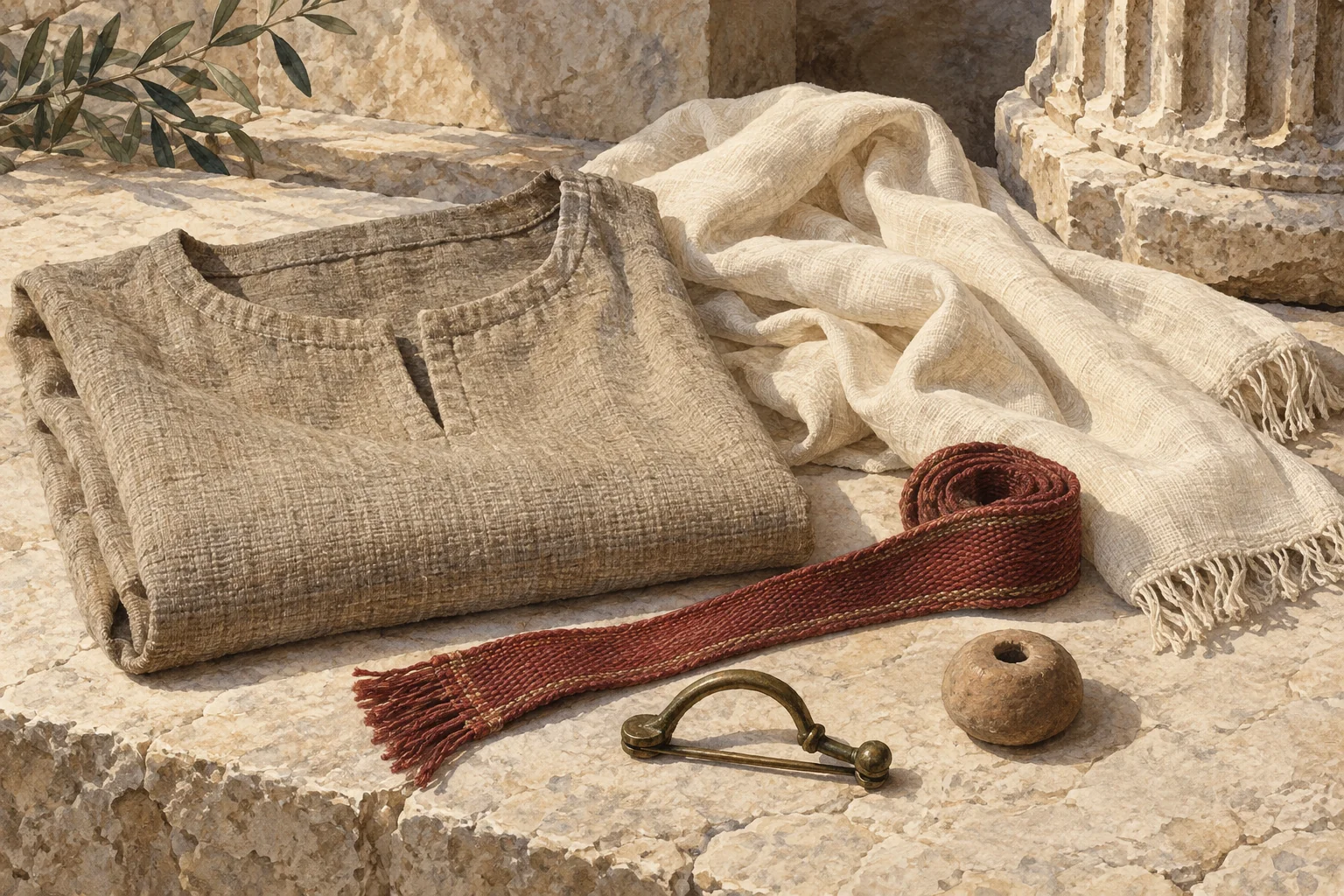
Imagine trying to reconstruct a wardrobe from a portrait, a buckle and a few scraps of fabric. You would learn something valuable, but you would also need to admit what was missing. That is the right spirit in which to approach dress in Roman Milan. The city’s ancient name, Mediolanum, invites a long historical view; it does not give us a complete catalogue of what every inhabitant wore.
Start with the Civic Archaeological Museum’s ancient Milan itineraries, which connect surviving places with the city’s Roman history. A walk through those layers is useful context for the objects, but architecture alone cannot tell you the fibre content of an ordinary person’s clothes. Keep three kinds of evidence separate: objects found locally, images from the wider Roman world, and modern interpretations of how garments worked.
The toga is a clue, not an entire wardrobe
The Metropolitan Museum’s Roman statue of a man wearing a toga shows a tunic beneath the larger draped garment. Its interpretation connects the toga with public identity and civic business. That example helps explain why dress in a formal image can carry social meaning. It should not be turned into a claim that everyone in Milan spent every working day wrapped in the same arrangement.
Ask what the image was made to communicate. A public statue may emphasize status, office or a desired association with tradition. It is not a candid view of a busy street. The distinction is familiar today: a formal portrait and the clothes someone wears while moving furniture can both belong to the same person, yet reveal different parts of their life.
Let uncertainty improve the picture
A Roman-period funerary image from Egypt at the Met provides a useful comparison precisely because it is not Milanese. The museum describes the woman’s layered clothing while acknowledging uncertainty about how some parts are constructed. That is a reminder that even a detailed image does not always explain where one garment ends and another begins.
Use such comparisons to develop questions, not to transplant a whole outfit to another region without evidence. Notice drape, fastenings, visible layers and ornament. Then ask whether the place, date and purpose of the object support the comparison you want to make. Our guide to reading clothes in Renaissance portraits uses the same method for a much later period.
Fastenings survive where cloth may not
Metal and stone often give a museum visitor a different kind of evidence from fabric. A fastening can suggest how something was held or displayed, but its survival does not reveal the complete garment around it. Material, wear, find location and the museum’s dating all matter. An object that looks wonderfully modern in a display case still needs its historical context.
Milan’s Archaeological Museum describes a gold Gothic belt buckle from the Landriano group in its early medieval section, dated to the fifth–sixth centuries. It belongs to a period of cultural interaction and should not be casually relabelled as a standard Roman accessory. The transition between periods is part of the story, rather than an inconvenience to be edited away.
Look for making, movement and social purpose
A useful museum exercise is to ask three questions of each dress-related object: what skill made it, how might it have worked on a body, and what did its appearance communicate? Keep the first answer close to the label. Treat the second and third as questions you are testing. This approach makes a small surviving object more interesting without requiring an elaborate reconstruction.
Our Milan fashion history hub follows those questions into later centuries, while medieval Brera and the cloth economy considers the work behind clothing. For a wider comparison of urban evidence, Italy Tour Hub’s guide to reading city history helps connect museums with the streets outside.
The pleasure of this subject is not discovering a straight line from a Roman fold to a contemporary runway. It is learning how much a garment can say, and how carefully we must listen when only part of it survives. Leave the museum with one well-supported observation and one good unanswered question. Both are more useful than a confidently invented ancient wardrobe.
Sources & further reading
Turn a good read into a great day.
Find a highly rated Milanese experience that brings these stories to life.
Explore related experiences →